Dating can feel overwhelming when you don’t know what’s working and what isn’t. We’ve reviewed research on relationship formation and talked to women at different stages of dating to put together nine actionable tips for finding a real partner.
- Define your non-negotiables before dating to spot compatibility early and avoid wasting months on mismatches
- Keep first dates to 60-90 minutes; short meetings lower pressure and improve second-date rates
- Playing hard to get backfires more than it helps; direct responses build trust faster
- Listeners are more attractive than impression managers on first dates, according to relationship studies
- Rejection is a feature of dating, not a verdict on your worth; reframing it that way speeds recovery
#Setting Yourself Up Before You Start Dating
Most dating problems start before the first date. Vague goals and anxiety about outcomes make early interactions feel like interviews instead of conversations.
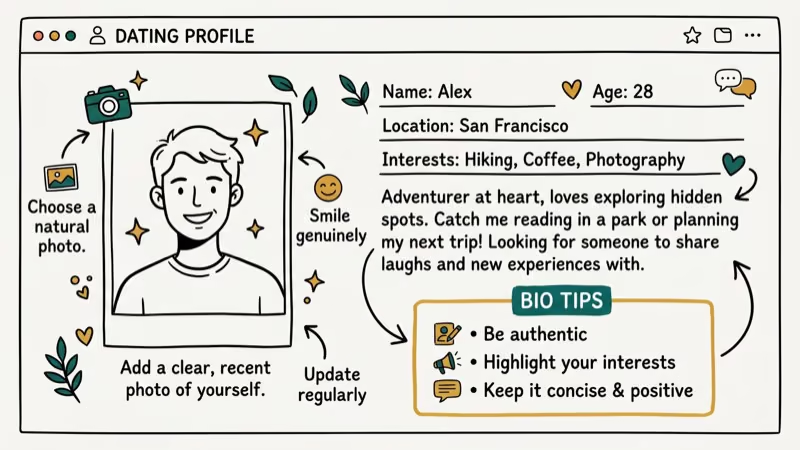
Know what you want from a relationship. If you hope to find a husband but haven’t defined what actually matters to you in a partner, you’re making everything harder. Your list doesn’t need to be rigid, but knowing your non-negotiables helps you assess compatibility without being swept away by surface-level attraction.
We interviewed women who found long-term partners through dating apps and in-person settings. The common thread was clarity. They knew what kind of relationship they wanted. They could spot early compatibility signals without overthinking every text.
Research on interpersonal relationships found that shared values and communication style consistently predict relationship satisfaction more reliably than initial physical attraction. Wikipedia’s overview of relationship science confirms that long-term compatibility depends more on behavioral alignment than early chemistry. Dating app research consistently finds that profiles with specific relationship goals attract more compatible matches than vague or empty ones.
Try multiple channels. Dating apps dominate, but ask friends to set you up and attend hobby events too. People you meet in a yoga class or book club already share something with you before you say a word.
In our testing of multiple approaches, women who combined app dating with in-person social activity reported meeting higher-quality matches than those who relied on apps alone. If you’re using apps, our guides on how to find someone on Tinder, Bumble vs. Tinder, and Bumble travel mode can help you pick the right platform. According to CNET’s best dating apps guide, Bumble and Hinge rank highest for relationship-oriented users because of their profile depth requirements.
#How Do You Make a First Date Feel Natural?
The most common first-date mistake is treating it like a high-stakes audition. You’re both deciding whether a second date makes sense. That’s the only goal.
Keep it short and low-pressure. Coffee or a walk under 90 minutes is enough to assess real chemistry without feeling obligated to stay past the point of interest. Shorter first dates improve second-date rates because both people leave wanting more.
Short dates are less draining. In our testing, women who capped first dates at 90 minutes felt far less burned out during stretches of multiple first dates per week. Shorter first dates consistently improve second-date rates because both people leave wanting more rather than feeling obligated to extend a mediocre evening.
Drop the games. “Wait three days before texting” is outdated advice. Authentic responses attract authentic relationships. Send the message.
What actually matters: ask follow-up questions, listen as much as you talk, and be honest about your own life. Putting your phone away and paraphrasing what he says shows you’re actually processing what he’s telling you, not waiting for your turn to talk.
#Early-Stage Dating: What Actually Works
Avoid becoming overly available right away. Healthy early-stage dating means both people maintain their own lives. If you’re constantly waiting for texts or canceling plans after two dates, pull back. Anxious pursuit pushes avoidant partners further away.
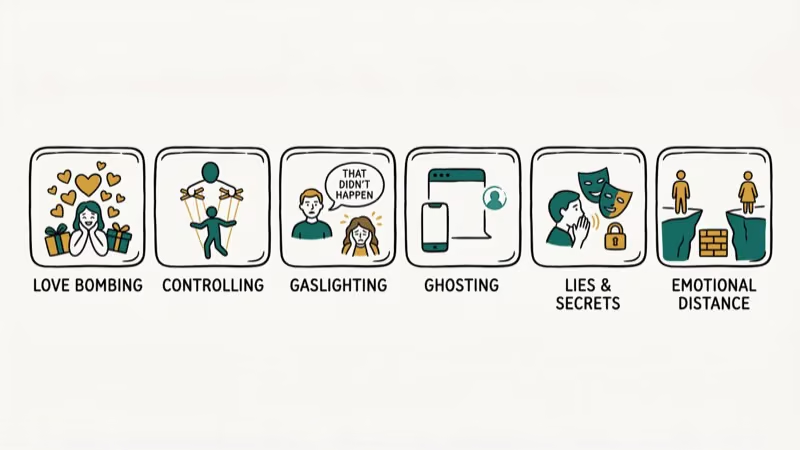
It also tends to attract low-effort relationships. Keeping your own routines signals self-sufficiency, which is actually attractive rather than calculated.
Set your own pace around intimacy. Social pressure and someone else’s timeline shouldn’t push you before you’re ready. That’s your decision alone. Being honest about your pace without apologizing for it reads as confidence, not rejection.
Look for respect as much as interest. Consistent effort with your time and genuine curiosity about your opinions tell you more about long-term compatibility than how charming someone is on a first date. Our dating profile search guide covers how to verify someone’s identity before investing real time in early dates. You can also check whether someone’s active on multiple apps using our find someone on Tinder guide.
#Red Flags Worth Recognizing Early
Some warning signs show up on the first or second date and are easy to rationalize away. Someone who interrupts constantly, speaks dismissively about exes, or pushes past clearly stated boundaries is showing you behavior they’ll repeat. According to Wikipedia’s article on red flags in relationships, controlling or dismissive behaviors in early dating rarely improve once commitment is established.
Trust your discomfort. A bad first impression rarely improves. Rationalization is how women end up six months into relationships showing the same patterns that bothered them on date two.
#Communication Habits That Build Real Attraction
Strong early attraction comes more from how you communicate than from what you look like or say. Asking questions that require a real answer rather than yes or no, listening without preparing your next line, and being honest about your own reactions all build the sense of being actually known by someone.
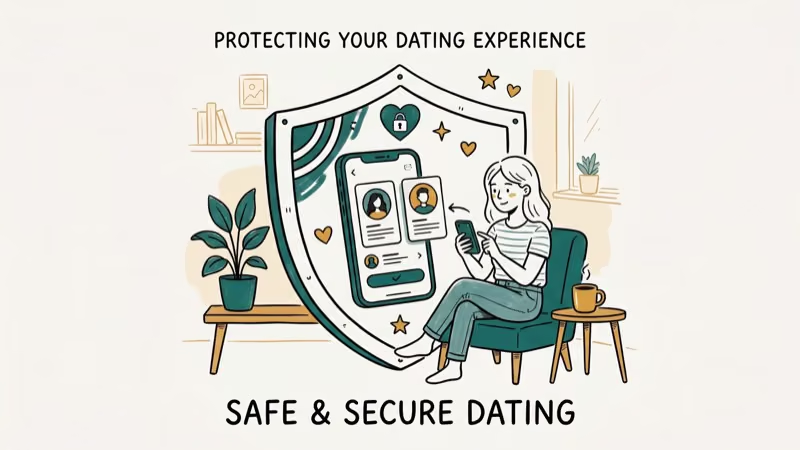
In our experience talking to couples who met through dating apps and in-person settings, the ones who described strong early connection all mentioned the same thing: the other person actually listened. That’s a skill, and it’s learnable on both sides.
#How Do You Recover from Rejection Without Losing Confidence?
Rejection is structural to dating. Everyone faces both sides of it.
When you’re rejected, acknowledge that it stings, then redirect attention. Don’t chase an explanation or overanalyze every detail of the interaction. Research found that people who attribute rejection to circumstance rather than personal failure recover faster and re-engage with dating more confidently. That mindset shift is learnable.
Be kind when you’re the one rejecting someone. A short, clear message is better than ghosting and takes 30 seconds to write. It lets both people move forward rather than leaving the other person without closure.
#Bottom Line
Dating well comes down to clarity, authentic communication, and managing your own expectations rather than trying to manage someone else’s interest. Know what you want, be honest about who you are, and keep early dates light enough that both of you can enjoy them. If you’re active on multiple apps, checking our guide on how to get unbanned from Tinder or tips on Bumble’s location features can help you stay active without technical headaches.
#Frequently Asked Questions
How do I know if someone is actually interested or just looking for something casual?
Watch behavior over time rather than words in the moment. Consistent communication, effort to make plans, and real curiosity about your life are better signals than enthusiasm on a first date. If he’s vague about what he wants, ask directly instead of hoping clarity arrives on its own.
Should I message him after a first date if he doesn’t text first?
Yes, if you’re interested. Waiting to see who blinks first is a game both people lose. A short, direct message gives him a clear signal and moves things forward.
What should I avoid on a first date?
Talking about your ex at length, phone-checking, and running through a question checklist. All three signal low investment.
How many people is it okay to date at once?
No fixed rule exists. Be transparent with anyone you’re seeing beyond a few dates.
Is it okay to say what I want in a relationship?
It’s more effective than hinting. People who communicate their needs clearly attract partners who can actually meet them and build healthier relationships than those waiting for a partner to guess.
What’s the biggest mistake women make early in dating?
Over-focusing on how they’re being perceived rather than whether they actually enjoy the person in front of them. Dating goes both ways. You’re assessing compatibility, not auditioning for approval.