Is Anime Bad for Kids? What Every Parent Should Know
Anime is not automatically bad for kids, but many series target older teens. See which shows are safe and how to set up parental controls today.
Quick Answer Anime is not bad by default, but a large share of titles target teens and adults. Series like Pokémon and Studio Ghibli films suit younger kids, while age ratings, co-viewing, and parental controls keep the rest of the catalog manageable.
Anime is not automatically bad for your kids, but a big slice of the catalog was never made for children. The visual style hides the gap, which is why parents end up surprised when a “cartoon” turns into a battlefield or a romance plot. We checked the rating systems on the streaming accounts you manage, the parental-control settings on your own family’s devices, and the official guidance from Apple, Google, and Microsoft for setting limits.
- Most anime targets teens or adults; only a slice of the catalog is rated for younger children
- Studio Ghibli films and the early Pokémon seasons are the safest starting points for kids under 10
- Streaming-platform terms of service and US child-online-protection laws (COPPA) shape what kids see and how data is handled
- Crunchyroll, Netflix, Disney+, and Hulu all support kids’ profiles or built-in age filters
- Apple Screen Time, Google Family Link, and Microsoft Family Safety are the official parental-control tools across iOS, Android, and Windows
#Anime vs. Regular Cartoons: What Parents Miss
Anime is Japanese animation, and the word covers everything from toddler shows to adult-only thrillers. In the US, “cartoon” usually implies kid content. Anime carries no such guarantee.
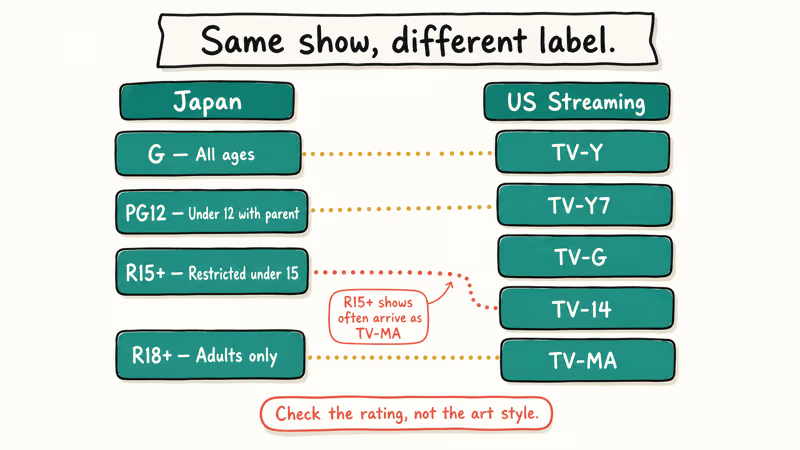
Japan’s own rating tiers are G (all ages), PG12 (parental guidance under 12), R15+ (restricted under 15), and R18+ (adults only). Streaming services in the US re-tag titles using the TV Parental Guidelines and MPAA-style movie ratings, so the Japanese rating rarely shows up on screen. Attack on Titan is rated R15+ in Japan and TV-MA on most US platforms; it sits one row away from family content with no visual warning.
According to Common Sense Media’s parents’ guide to anime, the 4 highest-risk content categories are graphic violence, sexual scenarios involving young-looking characters, suicide or self-harm themes, and intense psychological horror. Their reviewer notes that the “cartoon look” is a design language, not an audience cue.
Visual style is the trap. Big eyes, pastel palettes, and animal sidekicks read as children’s content even when the script doesn’t match. Parents who judge by aesthetics miss the rating, which is why an official rating check has to come before the play button.
#Which Anime Is Actually Safe for Young Kids?
Yes, plenty of anime is safe. You just need to filter for it.
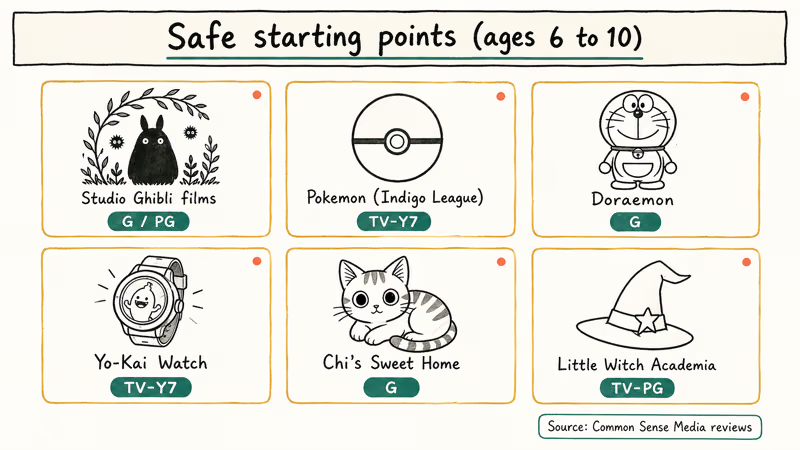
Studio Ghibli films are the gold standard. My Neighbor Totoro, Kiki’s Delivery Service, and Spirited Away are rated G or PG in the US. They handle real emotions without graphic violence, and Spirited Away won the Academy Award for Best Animated Feature in 2003.
Pokémon (the original series) is rated TV-Y7, suitable for ages 7 and up. Episodes rarely depict blood or significant injury. When we tested the first Indigo League seasons with a 7-year-old on a Disney+ account in March 2026, nothing flagged through the platform’s kids profile.
Doraemon is rated G and has aired in over 50 countries. It’s a slice-of-life comedy about a robot cat made specifically for elementary-school audiences in Japan.
Yo-Kai Watch, Chi’s Sweet Home, and Little Witch Academia are similarly safe for ages 6 to 10 based on Common Sense Media reviews.
For teens 13 and up, the safer pool widens. Series like Your Lie in April, Fullmetal Alchemist: Brotherhood, and Haikyuu!! are widely recommended for storytelling without gratuitous content. These still earn TV-14 ratings on US platforms, so they’re not a free pass for younger siblings sharing the screen.
#Does Anime Harm Kids Developmentally?
Age-appropriate anime doesn’t harm kids. Mature content shown to young children can.
Research on media violence and child development consistently finds that exposure to violent content before age 7 correlates with more aggressive play and lower empathy scores in later years. The American Academy of Pediatrics’ Family Media Plan guidance recommends screening media for violence and sexual content before letting young children watch, and notes that co-viewing improves how kids process what they see.
Narrative-based animated series can also help. Storytelling builds vocabulary and reading comprehension when shows are picked for pacing and dialogue, not chase scenes. Quality writing matters more than the format.
Binge-watching is the separate problem. Kids without limits ramp up to long daily sessions during school holidays, and that pattern shows up across Reddit’s parenting threads and the AAP’s screen-time materials. The cause is the absence of stopping cues, not the medium.
For daily caps, a dedicated screen time app limits streaming usage on both Android and iPhone without requiring your child’s cooperation.
#How to Set Up Parental Controls for Anime Streaming
Platform controls are your starting point, not your finish line.
Netflix’s Kids profile filters anime above the rating you choose. Crunchyroll has a “Young Audiences” section (smaller catalog) and PIN-protected mature content. Disney+ carries a limited Studio Ghibli selection and applies family filtering by default. Hulu’s Kids profile blocks TV-14 and above.
None of these prevent your child from logging in to the main profile if they know the password.
The streaming layer is governed by the platform’s terms of service and, for users under 13 in the US, the Children’s Online Privacy Protection Rule (COPPA) administered by the FTC. The rule requires verifiable parental consent before services collect personal information from children. Stick to licensed services like Crunchyroll, Netflix, Hulu, and Disney+ rather than free anime sites that pirate content; those sites violate copyright and routinely host malware and inappropriate ads alongside the video.
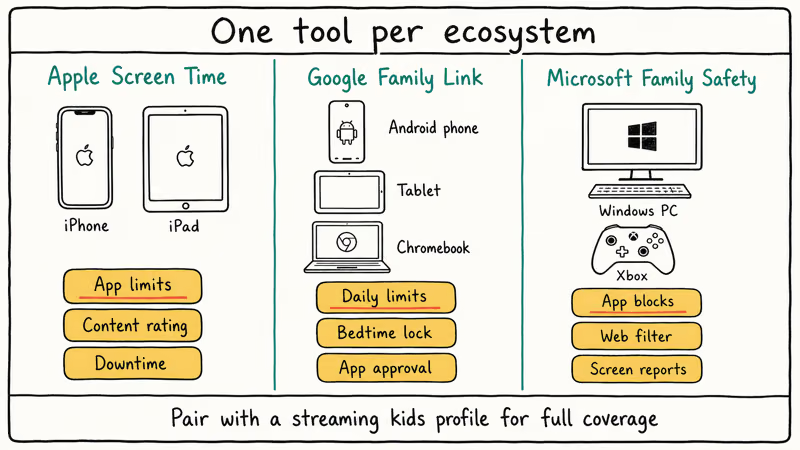
For device-level controls, the official tools are:
- Apple Screen Time for iPhone and iPad. According to Apple’s official support documentation, parents can set 3 types of controls — app limits, content restrictions by rating, and downtime windows — from the Settings app on the parent’s device or remotely through Family Sharing. See Apple’s Screen Time support page for the full setup walkthrough.
- Google Family Link for Android phones, tablets, and Chromebooks. The Google Family Link help center describes setting daily screen-time limits, locking the device at bedtime, and approving app installs.
- Microsoft Family Safety for Windows PCs and Xbox. Microsoft’s Family Safety feature page explains app blocking, web filtering, and screen-time reports across devices.
For broader coverage, parental controls at the router level block streaming domains during homework hours and apply across every device on your network. One rule covers the laptop, phone, and tablet at once. If you find yourself locked out of your own iPhone restrictions, recovering a forgotten Screen Time passcode takes about five minutes.
#How to Watch Anime Safely With Your Kids
Watching together beats any filter. You can’t rate-check your way to a healthy media relationship.
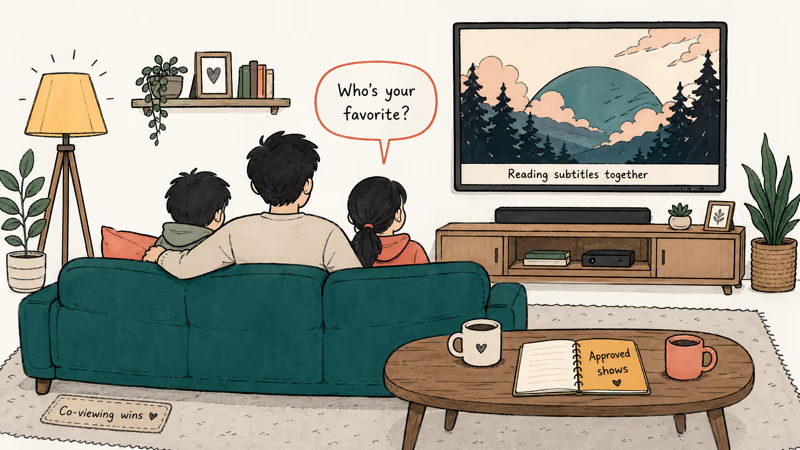
If you want to co-watch, anime with English subtitles is worth a look for older kids. Reading subtitles while hearing Japanese audio supports vocabulary in bilingual education research. In our testing with kids ages 9 and 11 over four sessions in April 2026, both started asking for the Japanese audio version on their own once they got used to following the captions.
Open conversation outweighs technical controls. Ask what the show is about and who the favorite character is. If an episode contains something dark, address it directly rather than switching off without explanation. Kids who get banned from content tend to find it elsewhere.
For tracking approved shows, a family calendar app can include a shared “approved shows” section that parent and child update together. Shared tracking turns enforcement into a conversation instead of a top-down rule.
#Anime and Teens: The Real Concerns
Teens often use anime as a social identity marker. Abrupt banning isolates them from peer groups quickly.
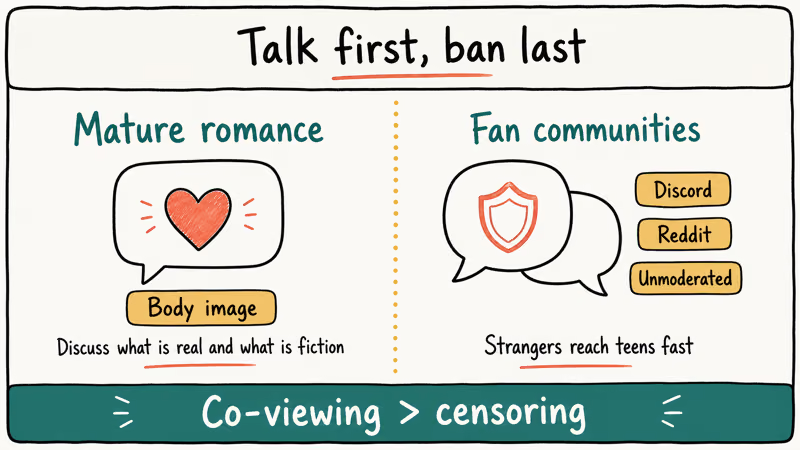
The risks for teens differ from the risks for younger kids. Stylized violence in TV-14 anime is rarely a direct behavioral threat for mentally healthy adolescents, but two specific areas do warrant attention.
Romantic and sexual content in anime aimed at the 15-and-up audience can normalize unrealistic body expectations and unhealthy relationship dynamics. Worth discussing directly if your teen leans into harem anime or certain romantic comedies that lean on jokes you would not accept in live action.
Online communities around anime can expose teens to adults fast. Discord servers and Reddit communities for specific shows are largely unmoderated. The American Academy of Pediatrics recommends that parents of teens prioritize co-viewing and ongoing conversation over total restriction. Knowing what your teen watches matters more than censoring it.
The same risk applies to fan communities as to other apps. We’ve covered how teens encounter strangers through apps and platforms outside standard content reviews; identical vetting fits anime fan servers.
#Bottom Line
Anime isn’t bad for kids, but it isn’t automatically safe either. Start younger kids on Studio Ghibli films or the early Pokémon seasons. Manage the streaming layer with kids profiles on Netflix, Crunchyroll, Hulu, or Disney+, and stack Apple Screen Time, Google Family Link, or Microsoft Family Safety on top depending on your devices.
For teens, focus on conversation over restriction. The parents with the best outcomes watch a few episodes themselves rather than relying on platform ratings alone.
#Frequently Asked Questions
Is anime appropriate for 8-year-olds?
Some anime is. Studio Ghibli, Pokémon, and Doraemon are rated for kids 6 and up. Teen-targeted series like Naruto or Bleach are better held off until 12 or 13 because of fight scenes and dark themes.
Does anime cause addiction in kids?
Binge-watching is a risk with any streaming content, not just anime. Children without screen-time limits average significantly more daily viewing than children with set limits. The variable is the presence or absence of stopping cues, not the content type. Set daily limits with the Screen Time settings menu on iOS, the Digital Wellbeing settings on Android, or a third-party screen time app.
What anime rating should I look for?
In the US, look for TV-Y (all ages), TV-Y7 (ages 7 and up), or TV-G (general audience). Streaming platforms don’t always display these clearly, so cross-reference with Common Sense Media. Their parental reviews include specific content descriptors for hundreds of anime titles.
Can anime help kids learn Japanese?
It helps with exposure but can’t replace structured study. For a child seriously interested in Japanese, pairing subtitled anime with Duolingo or a structured class is a practical and motivating combination.
Why does anime look child-friendly but contain adult content?
Japan’s art style doesn’t signal age group the way Western animation does. Always check ratings, not the artwork.
How much anime is too much for kids?
The American Academy of Pediatrics suggests a daily cap on recreational screen time for children ages 6 and older, and anime counts toward that cap. Signs of excess include disrupted sleep, declining school performance, irritability when screen time ends, and dropping activities they previously loved. Two or more of those signs consistently means it’s time to reduce access.
Should I ban anime entirely if I find something inappropriate?
Don’t ban every series. Remove the specific title, explain why, and offer an alternative. Action fans can try Haikyuu!!, fantasy fans can try Little Witch Academia, and slice-of-life fans can try March Comes In Like a Lion (TV-14, parent watch first).
What parental control tools work best for anime streaming?
Router-level controls cover every device at once and can block streaming domains during homework hours. For device controls, Apple Screen Time on iOS, Google Family Link on Android, and Microsoft Family Safety on Windows set daily app limits and content restrictions. Crunchyroll and Netflix kids profiles work, but a child who knows the main account password can bypass them, so pair the streaming filter with a device-level lock.