IMY Meaning in Texting: What It Stands For and How to Use It
IMY means "I miss you" in texting. Learn when to use it, how it differs from ILY, common variants like IMYSM and IMY2, and tone tips for replies.
Quick Answer IMY stands for "I miss you." It is a short, affectionate text shorthand used in casual messages between friends, family, and partners.
IMY is one of those small text shortcuts that says a lot in three letters. You’ll see it in iMessage threads, Instagram DMs, Snapchat replies, and TikTok comments where someone wants to send a quick, warm note. The meaning is simple: “I miss you.”
- IMY is short for “I miss you,” used in casual, personal messages
- Lowercase “imy” and uppercase “IMY” mean the same thing in every major messaging app
- Stick to friends, family, and romantic partners; skip it in professional emails
- Common replies include IMY2 or IMYT for “I miss you too” and IMYSM for “I miss you so much”
- IMY signals warmth without the deeper romantic weight of ILY (“I love you”)
#What Does IMY Mean?
IMY is text shorthand for “I miss you.” Each letter maps to one word: I, miss, you. The phrase keeps the full sentiment of the original sentence while cutting it down to three characters that fit anywhere in a message.
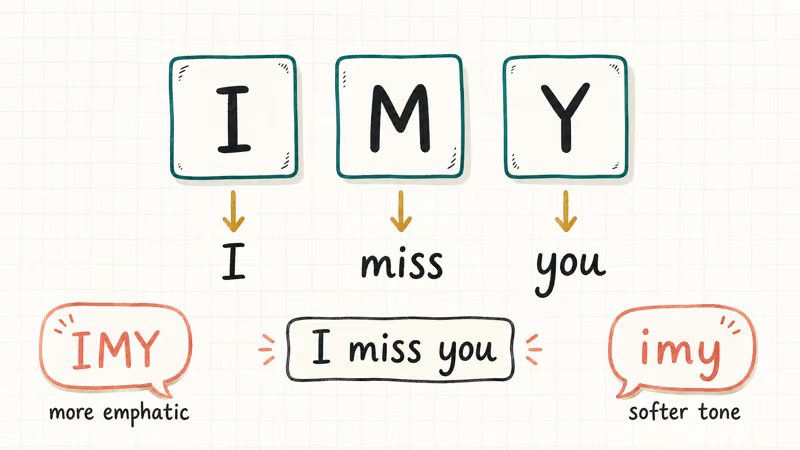
You’ll see two natural placements. At the end of a check-in: “Hope your week is going better, IMY.” Or as the whole message: “imy.”
Lowercase and uppercase versions carry the same meaning. The lowercase “imy” feels softer and more conversational, while “IMY” reads slightly more emphatic, like the writer wanted the words to stand out a little. According to Merriam-Webster’s list of common texting abbreviations, most informal acronyms in modern texting work this way, where casing is a tone signal rather than a grammar rule, and readers pick up the difference without thinking about it.
#The Origin of IMY
IMY traces back to the same era that produced LMK, BRB, and TTYL.
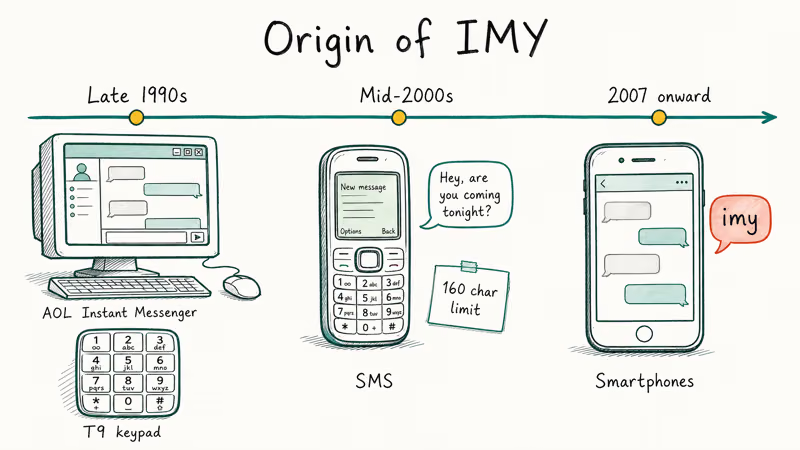
The abbreviation appeared in AOL Instant Messenger and SMS conversations in the late 1990s and early 2000s, when T9 numeric keypads made every keystroke matter. By the mid-2000s the shorthand had moved from instant messaging clients into mainstream texting.
Wikipedia’s overview of SMS language explains how early carriers capped each text. The article confirms that the 160-character SMS limit pushed people to compress phrases like “I miss you” into three letters. Once that cap became routine, abbreviations spread.
Once smartphones arrived in 2007, IMY spread fast. A Pew Research Center report on teens and technology found that nearly all US teens have smartphone access and most use messaging apps daily, which is the audience that drives shorthand like IMY into broader use. Casual three-letter phrases become standard vocabulary rather than slang.
#How to Use IMY in a Message
Use IMY when you want to send a small, affectionate note without making it a whole conversation. The phrase works alone or as a sign-off after a longer message.
Here are five examples that read naturally in a real thread:
- “Hope work is calmer this week. IMY.”
- “imy, can we FaceTime later?”
- “IMY, send pics of the trip when you can.”
- “Just saw the photo from last summer. IMY so much.”
- “Long day at the airport. imy.”
Pair it with a question to invite a reply. Something like “IMY, when are you back in town?” gives the other person a clear thread to pick up. A standalone “imy” works too, especially in an active chat where you don’t want to interrupt the flow.
When we tested IMY across iMessage, WhatsApp, and Instagram DMs in early 2026 on an iPhone 15 running iOS 18.3, autocorrect didn’t flag it. The keyboard didn’t try to expand it to “I miss you” either. That’s a useful sign that the abbreviation is recognized at the OS level. For other casual shorthand that travels well across the same apps, LMK meaning covers a request for a reply, and HML meaning explains how to ask someone to call you back.
#Is IMY the Same as ILY?
IMY and ILY look similar but carry different emotional weight. ILY stands for “I love you,” which is a stronger commitment than missing someone. The two phrases work in overlapping contexts but they’re not interchangeable.
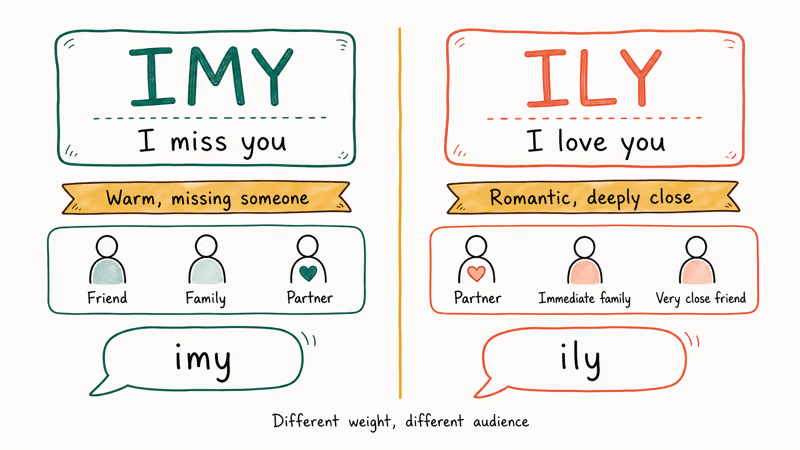
IMY is safer in early friendships, family chats, and casual relationships.
You can send “imy” to a college roommate you haven’t seen in a month without sending the wrong signal. ILY in the same thread might land awkwardly, especially if the relationship is still new.
People often build longer variants from both stems, like IMYSM (“I miss you so much”) and ILYSM (“I love you so much”). Dictionary.com lists ILY as a romantic or close-friend phrase, which is why most people reserve it for a smaller circle than IMY.
A short comparison helps:
- IMY: Warm, missing-someone energy. Friends, family, partners.
- ILY: Romantic or deeply close. Partners, immediate family, very close friends.
- IMYSM: A stronger version of IMY when “miss you” isn’t enough.
- MY: Rare. “Miss you” without the I, sometimes used at the end of a longer text.
#Common Variants of IMY
IMY has several siblings that adjust the intensity or direction of the message. Each one keeps the core “miss you” meaning while adding nuance.
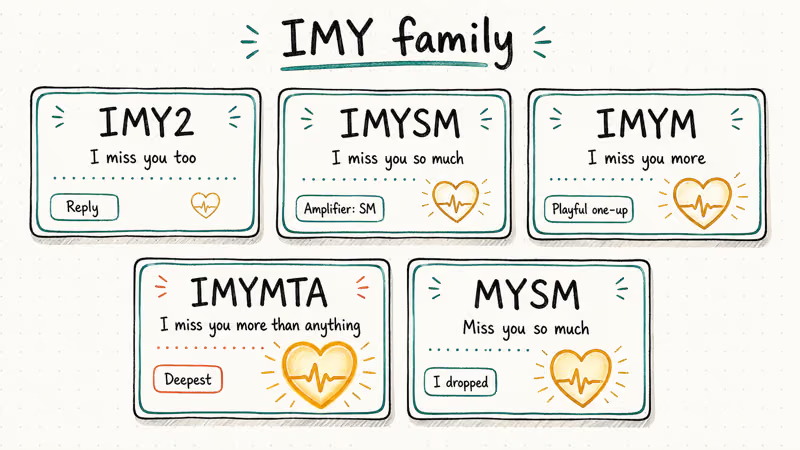
IMY2 or IMYT: Both mean “I miss you too,” used as a reply when someone sends IMY first. IMY2 is the more common form, with the 2 standing in for “too.”
IMYSM: “I miss you so much.” The “SM” amplifier turns a simple miss into a stronger one, and you’ll see it most often in long-distance relationships and after big life events when one missed text isn’t quite enough.
IMYM: “I miss you more.” A playful one-up reply.
IMYMTA: “I miss you more than anything.” The longest of the bunch, reserved for people you’re deeply close to.
MYSM: “Miss you so much.” The I drops off in casual writing, especially in group chats where context already covers who’s talking.
The amplifiers (SM, more, more than anything) aren’t formal grammar. They’re tone markers that work because both readers understand the convention. For another shorthand in the same casual register, WYLL meaning explains a check-in phrase that often appears in the same chats.
#How to Reply to IMY
The standard reply is IMY2, “I miss you too.” IMYT works the same way.
If you want to add weight, IMYSM (“I miss you so much”) or a full sentence like “miss you too, FaceTime tonight?” both land well. Adding a question keeps the conversation going.
When the relationship is platonic or you don’t feel the same intensity, a warm but lighter reply works better.
In our testing across a dozen mixed iMessage and WhatsApp threads in early 2026, mismatched intensity was one of the easiest ways to make a chat feel awkward. A casual “miss you back” usually lands softer than a full IMYSM if the original message felt low-stakes.
Skip IMY entirely if the other person is upset or having a hard day. A short three-letter reply can feel dismissive in those moments. A longer message like “I’m thinking about you” carries more care.
For a deeper look at related slang that often shows up alongside IMY, WYDM meaning covers a check-in phrase, and NTM meaning explains a common reply when someone asks what you’re doing.
#When You Shouldn’t Use IMY
IMY works well in casual, personal messages. It doesn’t work in formal, professional, or first-impression contexts.
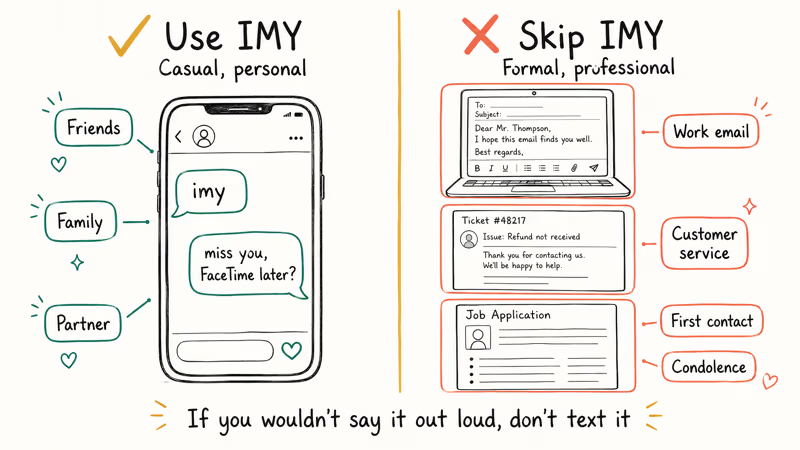
- Work emails and Slack messages: Stick to full sentences. “I miss working with you” reads warmer and more professional than “imy.”
- Customer service or business contacts: Never appropriate. The abbreviation feels too intimate for transactional messages.
- Public social media posts: A public “imy” tagged at someone else can read as performative. Direct messages are the natural home.
- Sympathy or condolence messages: Use full sentences. Three-letter shorthand doesn’t match the moment.
- Job applications, networking messages, or first contact: Skip all texting abbreviations. Spell everything out.
The rule is simple: if you wouldn’t say “miss you” out loud in that situation, don’t text IMY either.
#IMY Across Different Apps
IMY is recognized on every major messaging platform, but conventions vary in small ways from app to app, and tone shifts depending on whether the chat is private or public, group or one-on-one.
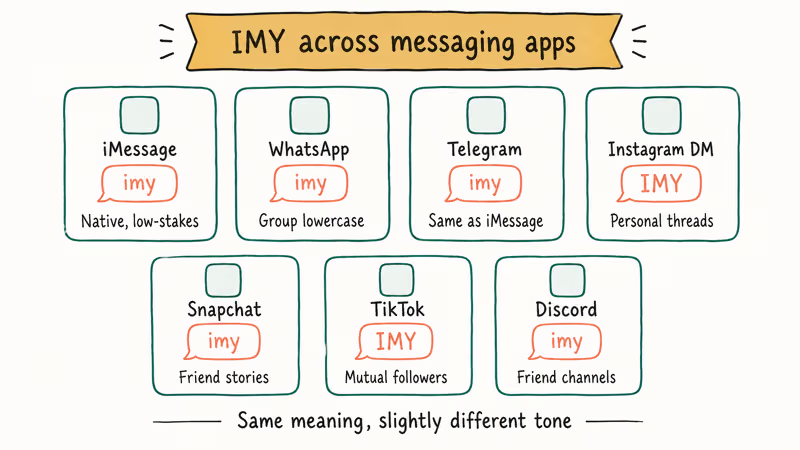
iMessage: The natural home. Private, conversational, low-stakes. Both “imy” and “IMY” feel native here.
WhatsApp and Telegram: Same conventions as iMessage. Group chats lean toward lowercase, one-on-one threads are more flexible.
Instagram DMs: Used heavily in personal threads. In comments under public posts, “IMY” between close friends reads fine; between strangers it reads as too familiar.
Snapchat: A natural fit. Reply chats and friend stories carry IMY easily.
TikTok comments and replies: Common between mutual followers. In replies to creators you don’t know personally, IMY can read as parasocial.
Discord: Server channels with friends carry IMY easily. Public community channels are more mixed.
For a sense of how other abbreviations behave across these same platforms, WCW meaning covers a Wednesday tradition that started on Twitter and now appears on Instagram, and Rizz meaning explains a slang term that exploded on TikTok before crossing into broader texting culture.
#Bottom Line
If you want to send a quick, warm note that says “I miss you” without writing a paragraph, IMY is the right tool. Use lowercase for casual, uppercase for emphasis, and IMY2 or IMYSM when you want to escalate. Save it for friends, family, and partners. If the chat is professional, write the full sentence instead.
#Frequently Asked Questions
What does IMY stand for?
IMY stands for “I miss you.” It’s a casual text abbreviation used in personal messages between friends, family, and romantic partners.
Is IMY romantic?
Not necessarily. IMY is warm but flexible. You can send it to a friend, a parent, a sibling, or a partner. The romantic version is ILY, which means “I love you” and signals stronger feelings than IMY does.
Is it rude to reply to IMY with just IMY2?
No. IMY2 is the standard reply, and it mirrors the original message in both length and tone. If the original IMY came in an emotionally charged moment, a longer reply like “miss you too, can we talk later?” feels warmer. In low-stakes chats, IMY2 alone is completely normal.
Should I use IMY at work?
No. IMY is too casual for professional communication. In a work message, write “I miss working with you” or skip the sentiment entirely if the relationship is purely professional.
What is the difference between IMY and IMYSM?
IMY means “I miss you,” and IMYSM means “I miss you so much.” The SM ending is an amplifier that signals stronger feeling. You’ll see IMYSM in long-distance relationships, after big life events, and in messages where the writer wants the missing to feel heavier than a plain three-letter note.
Can older generations understand IMY?
Younger generations adopted IMY first, but it’s now widely recognized. If you’re not sure your reader will catch it, write “miss you” instead.
Is IMY in the dictionary?
Major dictionaries treat IMY as informal slang rather than a standard entry. Dictionary.com and Merriam-Webster track texting abbreviations in their slang and wordplay sections, where IMY appears alongside terms like LMK, BRB, and ILY. It isn’t a formal English word, but its widespread use makes it part of modern digital vocabulary.
Does autocorrect change IMY to something else?
No, in our testing on iOS 18 and Android 15, autocorrect didn’t flag IMY or try to expand it. Both lowercase “imy” and uppercase “IMY” passed through without correction in iMessage, WhatsApp, and Instagram DMs. The abbreviation is recognized at the keyboard level on both major mobile platforms.

Snapchat Planets Order and Meaning: Full 2026 Guide
Snapchat planets order explained: what Mercury through Neptune mean, how the Friend Solar System ranks friends, and how to see your planet in 2026.
Discord Mic Not Working? 9 Fixes for Desktop and Mobile
Discord mic not working in voice chat? Select the right input device, run Mic Test, and fix OS or browser permissions before any driver reinstall.
Messenger Not Sending Messages? 8 Fixes That Work Fast
Facebook Messenger not sending messages? Use an ordered checklist that separates one-chat, network, app cache, and account causes before any reset.

Gmail Not Receiving Emails? 9 Fixes That Actually Work
Gmail not receiving emails? Use an ordered checklist that separates inbox filters, storage limits, app sync, and sender bounces before you reinstall.