HeroForge Alternatives: 8 Top Builders Compared 2026
Compare 8 HeroForge alternatives for tabletop minis in 2026. Eldritch Foundry, Anvl, and DesktopHero ranked by customization, price, and STL export.
Quick AnswerEldritch Foundry is the closest HeroForge alternative for tabletop minis with comparable customization and STL export. Anvl is the best free option, and DesktopHero gives you offline character building with no subscription.
HeroForge built the customizable tabletop mini market, but the $19.99 base price for a single painted figure has pushed plenty of players to look elsewhere. This guide covers 8 alternatives across browser, desktop, and STL marketplace platforms, comparing parts libraries, color tools, export options, and the actual cost to get a usable D&D mini in your hand.
- Eldritch Foundry has one of the deepest part libraries among browser-based builders, with over 1,200 weapon and armor combinations listed.
- Anvl is the only fully free customizer with unlimited STL exports, though pose options are limited compared to paid tools.
- DesktopHero runs offline and exports STLs without a subscription, which matters if you own a 3D printer.
- MyMiniFactory runs one of the strictest printability checks among the major STL marketplaces.
- Cults3D averages 30 to 40 percent lower prices than direct studio stores for licensed designs.
#Why Look Beyond HeroForge?
HeroForge dominates Google search results for “custom tabletop miniature,” but that doesn’t make it the right tool for every player. Three reasons push players toward alternatives. The first is price: HeroForge charges around $19.99 for a base mini and $29.99 for a color print, which adds up fast for a 5-character party.
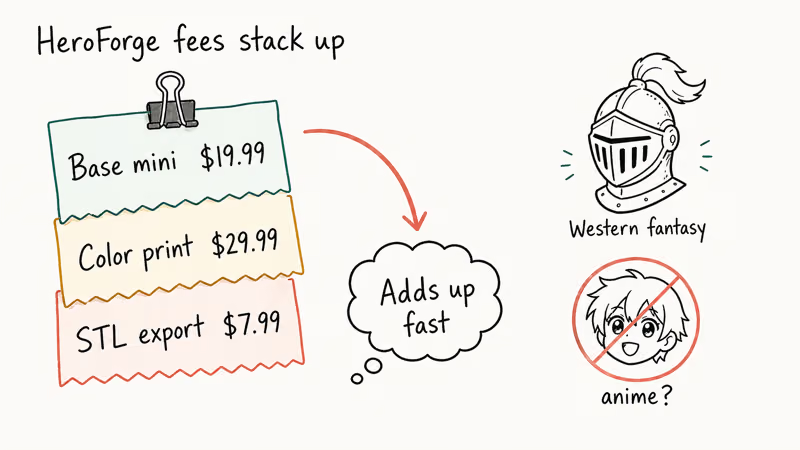
The second reason is style. The part library leans Western fantasy and semi-realistic. Chibi or anime fans look elsewhere.
The third reason is export. HeroForge’s STL download costs $7.99 per character on top of any other purchase, and the geometry is locked to their part library. Tools like Eldritch Foundry and DesktopHero handle this differently, letting you keep more control over the file you take home.
Export geometry is one of the clearest dividing lines between these tools.
#How To Compare These Tools
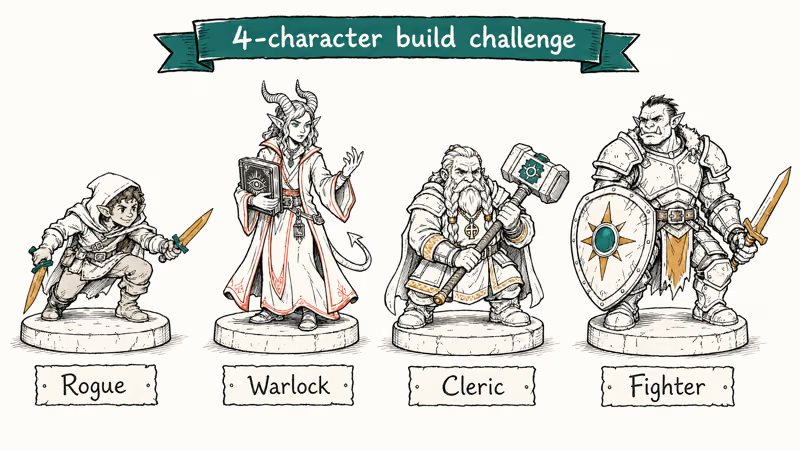
A fair comparison uses the same brief across every builder. A solid stress test is a 4-character build: a halfling rogue with twin daggers, a tiefling warlock with a tome, a dwarf cleric with a warhammer, and a half-orc fighter in plate armor. The things that matter are how long a build takes, what parts are missing, and the final price for a printed or exported character.
According to Wikipedia, tabletop RPGs date to 1974 and the modern hobby has tens of thousands of active groups, with the tabletop role-playing game article tracking system splits including D&D, Pathfinder, and Call of Cthulhu. That breadth matters because tools have to handle race, class, and equipment variety to score well on a mixed party. Posing handling is another factor worth weighing, since static T-pose figures look flat on the table.
Pricing comparisons use list prices as of April 2026 in USD, before shipping. The free tier numbers reflect each platform’s published pricing page.
#Eldritch Foundry: Closest Match To HeroForge
Eldritch Foundry has the most direct overlap with HeroForge’s customization model. You build in a browser, swap parts on the fly, and finish with a print order or an STL download. Where HeroForge skews semi-realistic, Foundry’s parts trend a touch more stylized, with sharper armor edges and more dramatic capes.
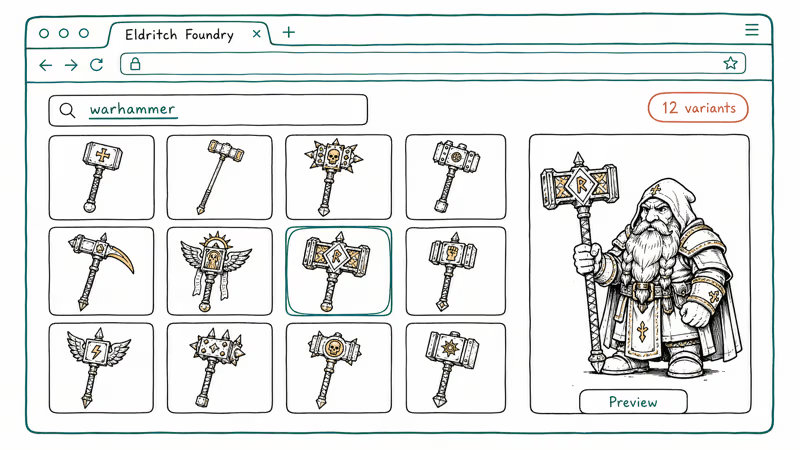
Foundry’s library covers the standard D&D archetypes, from twin-dagger rogues to plate-armored fighters, so a mixed party rarely runs into missing parts. STL exports cost $9.99 versus HeroForge’s $7.99, but printed minis run $24 to $29.
The filter is one of its strongest features.
The part filter system surfaces useful results, so typing “warhammer” returns a list of weapon variants rather than a generic catalog. The main tradeoffs are pose presets, which are fewer than HeroForge, and camera controls that take a few minutes to get used to.
#Anvl: The Best Free HeroForge Alternative
Anvl is a browser-based mini builder that doesn’t charge for STL exports. According to Anvl’s pricing page, basic export is free with an account, and premium parts come through a one-time purchase rather than a subscription.
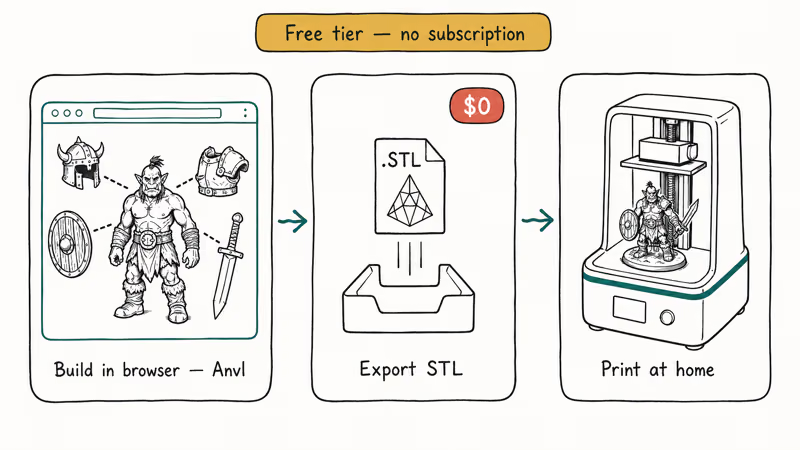
Anvl’s free tier covers most standard builds. Specialty parts run around $4.99 as one-time purchases, not subscriptions.
Anvl’s interface is simpler than HeroForge or Eldritch Foundry, with fewer pose sliders, no color preview at the part level, and a lightweight single-page layout. If you paint your own minis or print in resin and prime in gray, that limitation disappears because you control the color palette anyway. If you want a fully painted figure shipped to your door, Anvl isn’t the right tool.
Worth checking: free tier limits.
#DesktopHero: Offline Builder With Free STLs
DesktopHero runs as a downloadable application rather than a browser app, which sets it apart from every other tool in this roundup. The original web version is gone, but the desktop builds for Windows, macOS, and Linux still work in 2026. STL export is included free.
Smaller library, no fee.
DesktopHero has a steeper learning curve, and some parts need manual adjustment to mount cleanly. The library is smaller than HeroForge or Eldritch Foundry but covers the core D&D archetypes.
The big tradeoff: no print-on-demand service. You need your own printer or a print service like JLCPCB or Shapeways to turn the STL into a physical mini. Pair it with one of the delta 3D printers covered in our guide for fast batch printing of party rosters.
#MyMiniFactory: Curated STL Marketplace
MyMiniFactory is a marketplace, not a customizer. You browse premade STL files from independent designers, pay per file or subscribe to a Tribe (similar to Patreon), and print yourself. According to MyMiniFactory’s about page, every file goes through a printability check before listing.
The math changes the cheaper your hourly print cost runs.
If you already own a resin printer and pay $0.30 to $0.60 per mini in materials, MyMiniFactory works out to roughly $1 to $5 per finished figure with a Tribe subscription, factoring resin cost, the per-mini share of a $300 printer amortized over 200 prints, and an average paid-tier subscription of $5 to $10 per month. That undercuts HeroForge’s print-on-demand pricing by an order of magnitude. The design selection covers genres HeroForge skips entirely, including anime, sci-fi, and chibi.
The catch: zero customization. You print what the designer made. For unique party characters, this is a poor fit. For monster minis, terrain, and NPC variety, it’s hard to beat.
#Cults3D: Bigger Library, More Bargains
Cults3D is similar in concept to MyMiniFactory but with a bigger and looser catalog. Cults3D reports having over 4 million 3D model files across all categories, with thousands tagged for tabletop and miniatures. Quality varies more than MyMiniFactory because the curation is lighter.
Expect a higher share of files that need support tweaks or geometry fixes than on MyMiniFactory, which is the tradeoff for the lower prices that often run 30 to 40 percent below studio direct.
Cults3D works best when you already know what you want and can read the designer reviews carefully.
For exploring without a clear plan, MyMiniFactory’s curation will save you frustration, especially on multi-part minis where bad supports or unprintable thin features only show up at the slicing stage when you have already committed to the file.
#Hero Mini Maker: Lightweight Steam Builder
Hero Mini Maker is a $4.99 Steam app that takes a different approach. Predefined part combinations with quick swaps, more like a character creator in an RPG video game than a free-form sculpt tool. Build time per mini is very fast because the choices are constrained.
The output STL files are decent for kitchen-table D&D but lack the fine detail of Foundry or HeroForge prints. For VTT players who only need a clear silhouette on the digital table, Hero Mini Maker is a fast way to get something usable. It won’t replace your nicer minis for the rare boss fight, but it gets the job done at $5 once.
#PCGen: Character Sheet, Not Miniature Builder
PCGen comes up in HeroForge alternative roundups because of the name overlap, but it’s actually an open-source character generator for RPGs, not a 3D mini tool. According to PCGen’s project page, it produces character sheets, manages stats, and supports multiple game systems including D&D 3.5 and Pathfinder.
Including it here for completeness: if you came looking for stat tracking and rules support, PCGen is excellent. If you came for a printable mini, skip ahead to one of the actual builders. PCGen pairs well with our best games like Baldur’s Gate picks for digital play, since both treat character sheets as the source of truth, and with our Dungeons and Dragons necromancy spells guide for spellcaster builds.
#Comparison Table: Price and Features
| Tool | Customizer? | Free STL? | Print-On-Demand | Best For |
|---|---|---|---|---|
| HeroForge | Yes | No ($7.99) | Yes | Beginners wanting polish |
| Eldritch Foundry | Yes | No ($9.99) | Yes | More part variety |
| Anvl | Yes | Yes (free) | No | Hobby printers on budget |
| DesktopHero | Yes | Yes (free) | No | Offline workflow |
| MyMiniFactory | No | N/A | No | Curated print library |
| Cults3D | No | N/A | No | Bargain STL hunting |
| Hero Mini Maker | Yes | Yes ($4.99 app) | No | VTT silhouettes only |
| PCGen | No (sheet) | N/A | N/A | Stat tracking and rules |
#Matching The Tool To Your Endpoint
Match the tool to your endpoint. If you want a painted figure delivered, Eldritch Foundry or HeroForge are the only realistic options because the others don’t run print-on-demand. If you own a 3D printer, Anvl and DesktopHero remove the per-character export fee and pay for themselves quickly. For monster nights and NPC swarms, MyMiniFactory or Cults3D make more sense than building each one by hand.
Style matters too.
HeroForge’s parts trend Western fantasy with semi-realistic proportions, so if your campaign is anime-styled or sci-fi, the best anime character creator tools might fit better than any tabletop-specific builder.
For board game crossover, our anime board games picks cover prepainted minis.
For paint reference, Reaper Miniatures’ painting guide covers prep, priming, and basic technique well. Pair the geometry tools with that guide and skip the upcharge.
#What Does Color And Painting Cost?
Most alternatives focus on geometry and leave painting to you. HeroForge and Eldritch Foundry both offer color customization in-app and ship painted figures, but the prices reflect the labor: $29.99 plus on HeroForge color, similar on Foundry. If you paint as part of the hobby, the geometry-only tools save real money and let you keep the creative control.
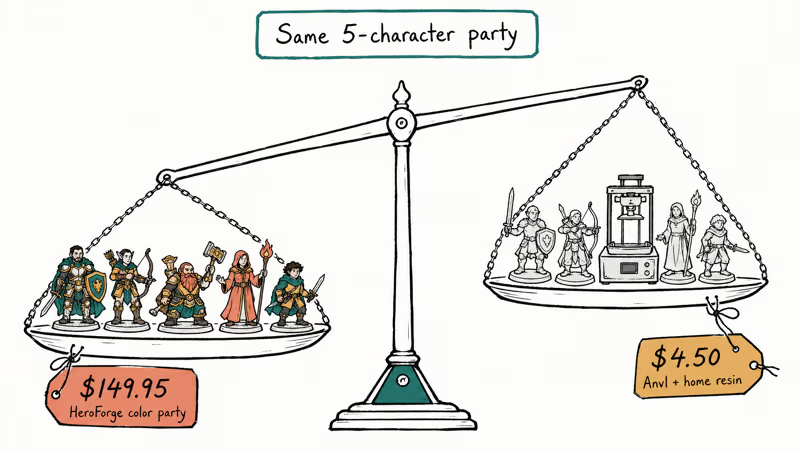
Painting yourself flips the cost math.
A 5-character party of HeroForge color minis comes to about $149.95 before shipping at the $29.99 color price. The same party built in a free tool like Anvl and printed at home in resin costs only a few dollars in materials. The economics shift fast once you have your own printer.
#Bottom Line
Pick Eldritch Foundry if you want HeroForge with more part variety and slightly cheaper printed delivery. Pick Anvl if you own a printer and want free STLs without a subscription. For a campaign full of unique monsters, MyMiniFactory’s curated marketplace beats trying to build each one. Skip PCGen unless you actually wanted a character sheet tool.
#Frequently Asked Questions
Is there a free alternative to HeroForge?
Yes — Anvl and DesktopHero.
Which HeroForge alternative has the best customization?
Eldritch Foundry. Its part library covers more weapon, armor, and accessory combinations than HeroForge, with roughly 1,200 pieces listed. The pose options are slightly fewer, but part variety wins on most builds, and the filter surfaces useful matches on the first attempt rather than burying them.
Can you print HeroForge minis without ordering from HeroForge?
Yes, but only if you pay the $7.99 STL export fee.
Are STL marketplace files printable on resin printers?
Most are. MyMiniFactory checks every file before listing, so its print success rate is high and consistent. Cults3D is more variable because it relies on user reviews rather than a curation team, so a small share of files need support tweaks or geometry fixes before they slice cleanly.
Which HeroForge alternative is best for anime-styled minis?
None of the dedicated tabletop builders handle anime well, so chibi and anime-styled fans usually pull source files from Cults3D or MyMiniFactory designer pages instead.
What’s the cheapest way to get a custom mini in 2026?
Use Anvl free, then print on a resin printer for $0.50 to $1 in materials.
Do these tools work on a phone or tablet?
Most browser-based builders work on tablets but not well on phones. Eldritch Foundry and HeroForge both run on iPad with some interface compromises around the camera controls and small-tap-target armor swatches, while Anvl is the smoothest mobile experience overall because the simpler interface scales down to a phone screen better than HeroForge’s denser UI does.
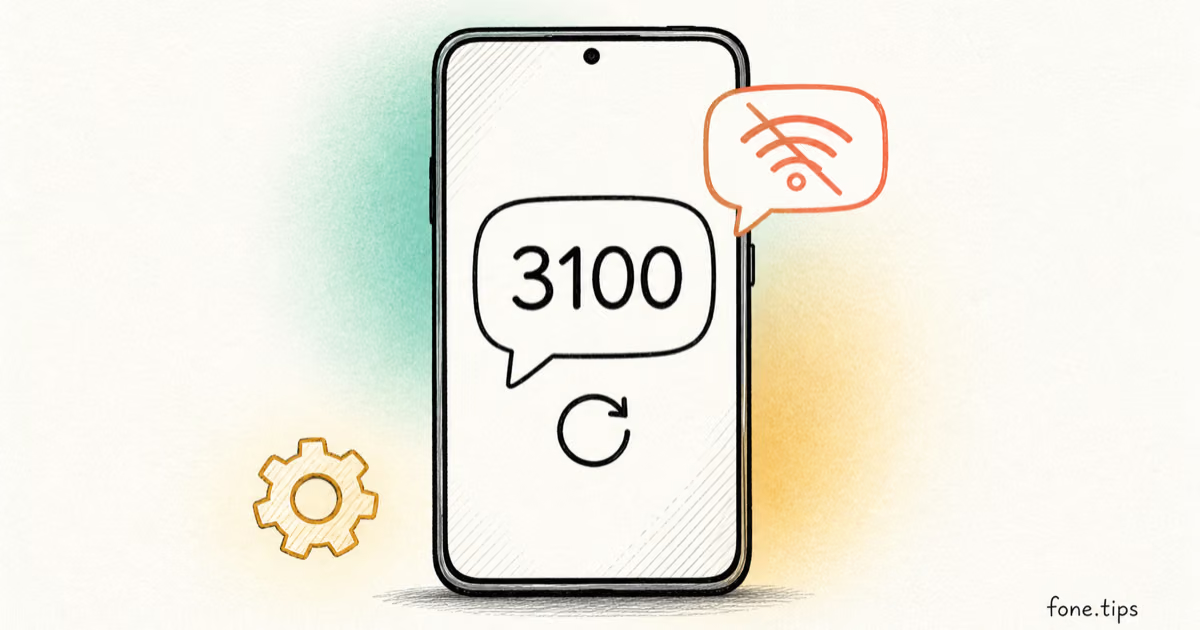
Google Messages Error 3100: Why RCS Is Broken on Galaxy
Google Messages RCS error 3100 hits Galaxy owners after phone or carrier switches. Google told 9to5Google a fix is coming. Here's what actually helps.

Is This Bank App Real? Spot a Fake App on Your Home Screen
A bank app can land on your home screen from a web page with no install warning. Learn the checks that tell a real banking app from a phishing web app.
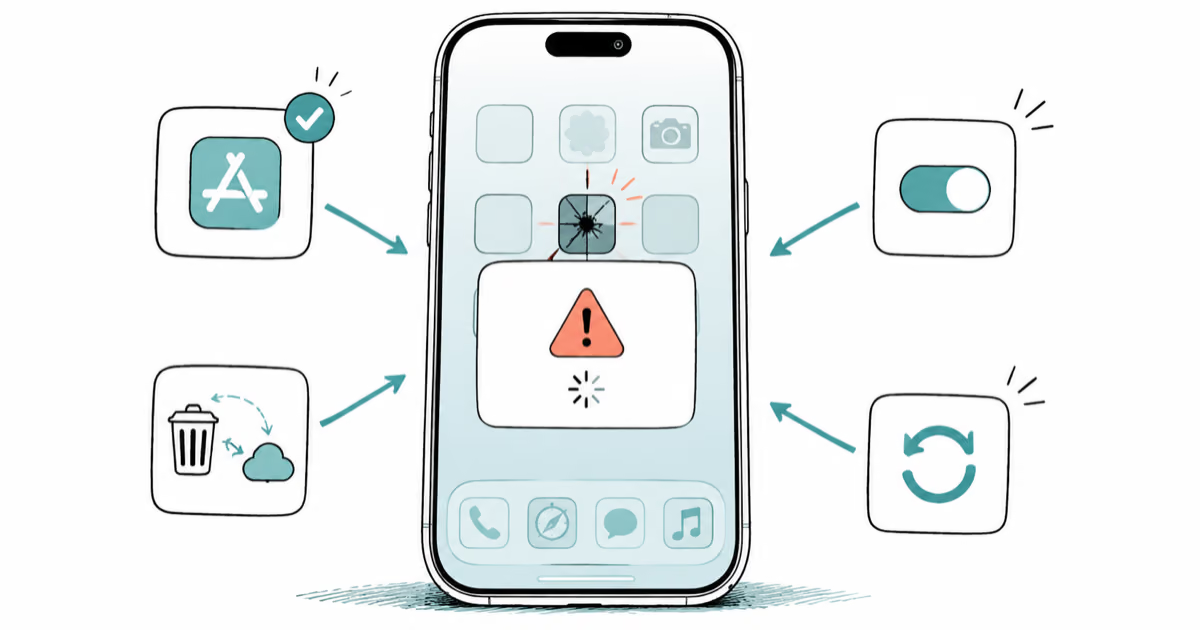
Apps Crashing After iOS 27 Update? Fix Order (2026)
Apps crashing after the iOS 27 update? Update the app in the App Store first, then offload and reinstall to clear stale cache, then restart. The fix order.
Do AI Translation Earbuds Work Offline? What to Know
Do AI translation earbuds work offline? A few do with downloaded language packs, but most need the cloud. Here's what works offline and what you give up.