Best Fire Emblem Games for True Gaming Enthusiasts
Ranked list of the 15 best Fire Emblem games based on gameplay, story, and tactical depth. Includes Three Houses, Path of Radiance, and more.
Quick AnswerFire Emblem Three Houses and Path of Radiance are the two standout titles in the series, offering the best mix of tactical depth, story quality, and replay value across 16 main entries.
The Fire Emblem series launched in 1990 on the Nintendo Famicom, developed by Intelligent Systems. What started as a Japan-exclusive tactical RPG has grown into one of Nintendo’s most beloved franchises, with 16 main titles spanning over three decades. The ranking below focuses on tactical depth, story quality, accessibility, and long-term replay value.
- Three Houses offers the most content with 4 story routes and 80+ hours per playthrough
- Path of Radiance stands out for its mature storytelling, tackling themes like racism and political conflict
- Beginners should start with Awakening or Three Houses, both of which include casual modes that remove permadeath
- The series spans 7 Nintendo platforms from Famicom to Switch, with most games available through emulation or virtual console
- Older titles like Thracia 776 and Genealogy of the Holy War reward experienced players with deeper tactical mechanics
#Home Console Origins
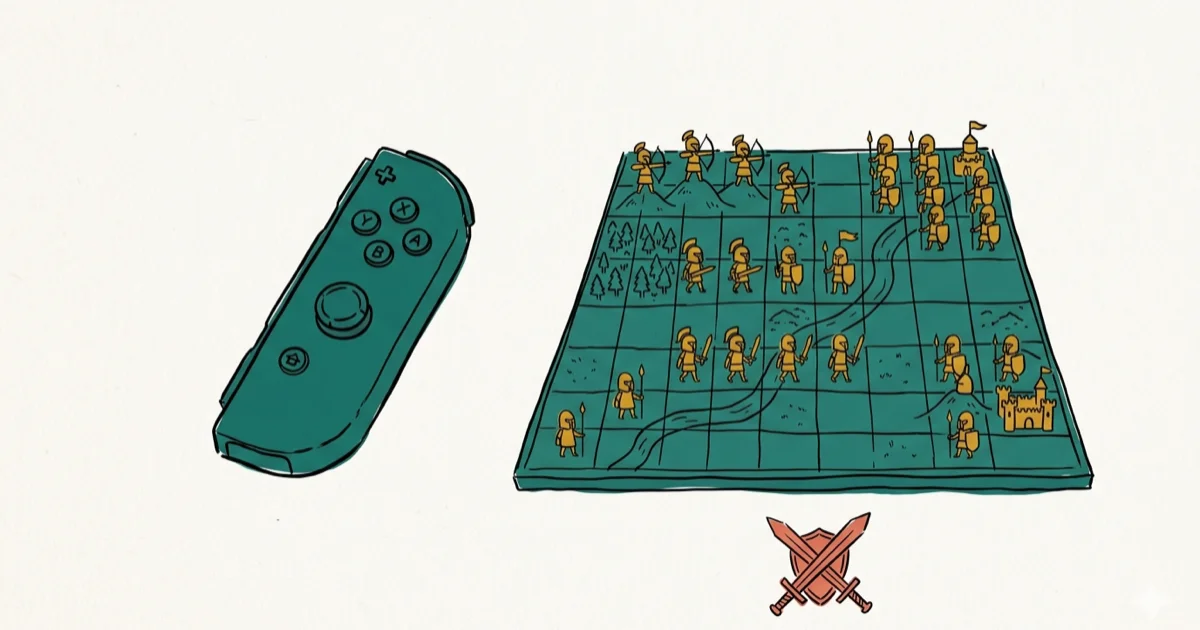
The series debuted on Nintendo’s home consoles before eventually expanding to handhelds and hybrid systems.
#Which Fire Emblem Games Are Worth Playing?
Here are the 15 best Fire Emblem games, ranked by gameplay quality, story depth, and lasting appeal.
#1. Path of Radiance
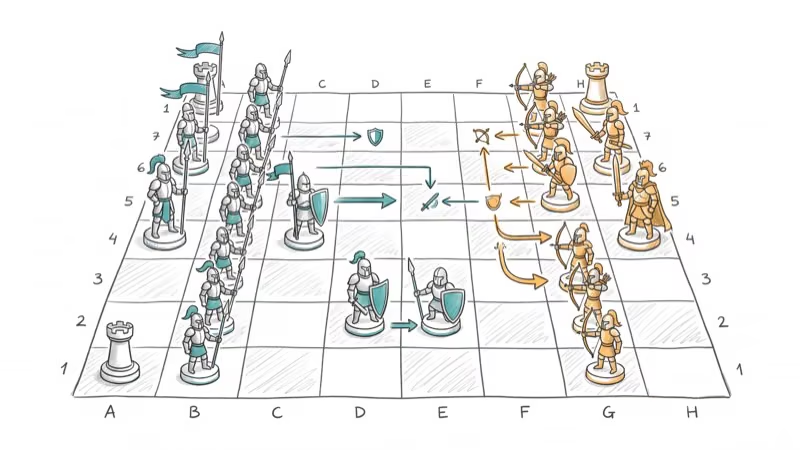
Path of Radiance was the first Fire Emblem game released for GameCube in North America, and it’s still one of the strongest entries in the series. The combat system and storytelling set it apart from nearly everything else in the franchise.
Unlike most JRPGs that follow a prince-and-princess narrative, Path of Radiance follows Ike, a mercenary drawn into a multinational war. The game tackles dark themes like racism and genocide through a politically driven conflict, and its tactical depth remains a major reason fans still recommend it.
The tactical mechanics offer clever positioning options that reward careful planning. If you enjoy games like Hearthstone or other strategy titles, Path of Radiance delivers that same satisfying crunch.
#2. Shadow Dragon and the Blade of Light
Shadow Dragon and the Blade of Light hasn’t aged as well as fans might hope. The graphics and mechanics feel outdated compared to every other entry in the franchise.
The gameplay is basic by modern standards. On the Famicom, it was impressive for its time, but later remakes rendered the original largely unnecessary for most players.
#3. Gaiden
Gaiden had a strange but successful entrance to the series as a side story to the original Fire Emblem. It introduced significant gameplay mechanic changes that made it feel very different from its predecessor.
The game features common JRPG elements and lets you explore various areas as the story progresses. Though it’s an extension of the original, the gameplay didn’t age well. Poor map design is the main reason it’s ranked lower on this list.
#4. The mystery of the Emblem
The Mystery of the Emblem remakes the original game while adding an entirely new story in Book II. The jump from Famicom to Super Famicom brought noticeable improvements to both characters and storytelling.
Some characters and chapters from the original were cut to make room for the new content. Despite these omissions, it’s a solid entry that improved on nearly everything the first game introduced.
#Game Boy Advance Era
The GBA era made Fire Emblem a global franchise, starting with Binding Blade in Japan and Blazing Blade in the West.
#5. Binding Blade
Binding Blade overhauled the game mechanics to fit handheld systems, making it the first Game Boy Advance title in the series. If you enjoy mobile gaming, you might also like games like Dragon City for a different kind of strategy experience. The transition worked well, bringing tighter map designs and smooth animations to a portable format.
Compared to Thracia 776, Binding Blade saw much more commercial success. The animation effects are excellent, and the map designs keep missions engaging.
That said, the starting characters are weak. Roy in particular is one of the least useful lords in the series, which can make early chapters frustrating.
#6. Shadow Dragon
Shadow Dragon is technically a remake of a previously remade game, but it’s historically important. It brought Marth’s story to western audiences for the first time on the Nintendo DS.
The gameplay strikes a good balance, offering hard modes for veterans and easier settings for newcomers. It lacks innovation though, and the story doesn’t deliver much excitement beyond the nostalgia factor.
The biggest complaint from players is the graphics. They’re widely regarded as the weakest in the entire series. If you can look past the visuals, the core tactical gameplay remains solid.
#7. The Sacred Stones
Sacred Stones was the last Fire Emblem on Game Boy Advance and the eighth title overall. It borrows elements from Gaiden, including an overworld map you can freely roam, similar to exploration in games like Monument Valley. You pick between two lords, Ephraim and Eirika, each with their own story path.
Optional skirmishes between main chapters let you grind for experience. The biggest downside is how easy the game feels. Veterans often finish it without losing a single unit.
For beginners though, that accessibility makes Sacred Stones an ideal starting point.
#Console and 3DS Era Standouts
The series hit its stride on home consoles and the 3DS, introducing features like casual mode and fully voiced cutscenes. According to a CNET retrospective, Fire Emblem titles consistently rank among the top 20 strategy games on every Nintendo platform since the Game Boy Advance.
#8. Thracia 776
Thracia 776 is widely considered the hardest game in the entire franchise. Beginners should look elsewhere, but experienced players will find a deeply rewarding tactical challenge here.
It’s also the worst-selling Fire Emblem game, which is a shame. The story is one of the strongest in the series, and mechanics like the capturing and fatigue systems add layers of strategy that no other entry has replicated.
The difficulty will frustrate some players, but it rewards careful planning and unit management.
#9. Awakening
Awakening earned its reputation as one of the best Fire Emblem games for good reason. It’s packed with content, fan-service callbacks to older titles, and polished presentation.
The graphics and voice acting raised the bar for the entire series. Awakening also introduced the relationship system that lets characters build support levels and even have children who join your army.
The gameplay has some balance issues, but the casual mode makes it welcoming for newcomers. Casual mode is the better entry point for players who have never touched a tactical RPG before, because it removes the pressure of permanent unit loss while they learn positioning and support systems.
#10. Fates
Fates splits into three separate games (Birthright, Conquest, and Revelation), each with its own story path. The concept is ambitious but confusing for newcomers who aren’t sure which version to buy first.
Conquest offers the best map design and tactical challenge of the three. Birthright is too easy even on harder difficulties, and the overall map design across all three paths is inconsistent.
#Japan-Exclusive Fan Favorites
Several of the series’ most mechanically ambitious entries never left Japan, though fan translations have made them accessible.
#11. Genealogy of the Holy War
Genealogy of the Holy War introduced weapon triangles and a marriage system where characters’ children inherit stats and skills. These mechanics became staples of later entries. The maps are enormous, often taking over an hour per chapter.
It’s nearly as difficult as Thracia 776, with huge maps and permanent unit loss adding to the complexity. The first-generation story is compelling, featuring political intrigue and betrayal that still holds up decades later.
#12. New Mystery of the Emblem
New Mystery of the Emblem remains a Japan-exclusive title, which is unfortunate given its quality. It’s an excellent game that expands the Book II story from the original Mystery of the Emblem.
Like Shadow Dragon, it offers a punishing difficulty mode for veteran players. It’s also the first Fire Emblem game to include a casual mode, removing permadeath for newcomers.
The level design ranks among the best in the series, with diverse map objectives that keep each chapter feeling fresh. Character portraits look better than Shadow Dragon’s, though the graphics still have room for improvement.
#13. Radiant Dawn
Radiant Dawn is a direct sequel to Path of Radiance, continuing Ike’s story on the Wii. The gameplay builds on its predecessor with meaningful additions like a skill system that lets you customize characters’ abilities for battle.
It’s one of the longest entries in the series. You’ll spend 40+ hours on a single playthrough, and the multi-part story structure keeps the pacing engaging throughout. Fans of long gaming sessions might also enjoy checking their Stardew Valley sprinkler setups between Fire Emblem chapters.
Radiant Dawn deserves to be played rather than just read about. It’s comfortably among the top tier of Fire Emblem games.
#What Are the Best Modern Fire Emblem Games?
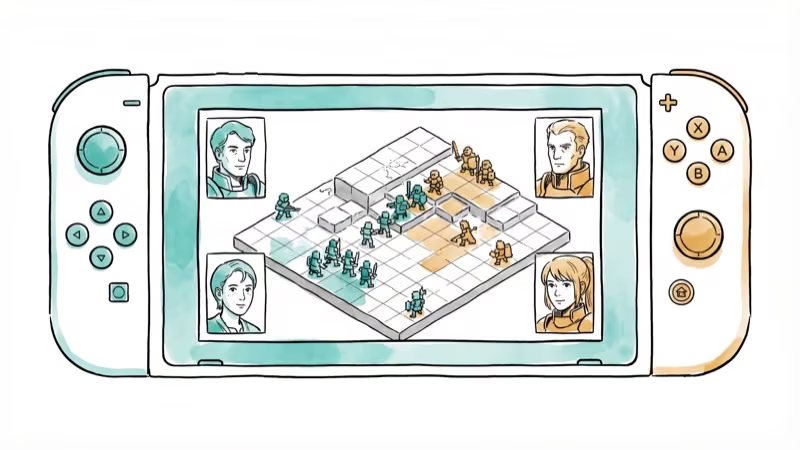
The 3DS and Switch era brought Fire Emblem to mainstream audiences with higher production values and more accessible design.
#14. Shadows of Valentina
Shadows of Valentia reimagines Gaiden with modernized visuals, new characters, and fully voiced dialogue. The voice acting is some of the best in the series, adding real emotional weight to story scenes.
New characters bring additional depth to the narrative. The Mila’s Turnwheel mechanic lets you rewind turns during battle, which reduces frustration without removing challenge entirely.
The main downside is the map design, carried over directly from the original Gaiden. The maps feel dated compared to other 3DS-era entries. Beyond that flaw, Shadows of Valentia is an excellent game.
#15. Three Houses
Not every Fire Emblem game hits the mark, but Fire Emblem Three Houses comes remarkably close. It’s one of the most customizable entries in the series, letting you build units exactly how you want them.
Be prepared to invest serious time here. Each of the 4 story routes runs 60-80 hours, and the class system offers enough depth to keep replays fresh. According to Nintendo’s official page, Three Houses has sold over 3 million copies worldwide.
The difficulty is on the easier side compared to older entries. If you want a punishing challenge, look at Thracia 776 or Conquest instead. But for sheer content volume, Three Houses is hard to beat.
#Bottom Line
The Fire Emblem series offers something for every type of tactical RPG fan. Three Houses and Path of Radiance sit at the top for their combination of story depth, tactical variety, and production quality.
Beginners should start with Awakening or Three Houses, while veterans will find a real challenge in Thracia 776. The games like Fire Emblem guide recommends similar experiences for players who enjoy strategy games with deep character systems.
#Frequently Asked Questions
Can you play Fire Emblem games on platforms other than Nintendo?
Fire Emblem games are primarily available on Nintendo consoles and handhelds. Some titles have been ported to virtual console services, and Shadow Dragon was remade for the Nintendo DS. As of 2026, there’s no official PC or PlayStation release.
Do you need to play Fire Emblem games in a specific order?
No, each game features its own story and characters. You can jump in at any point. That said, a few games are direct sequels (Path of Radiance leads into Radiant Dawn, for example), so playing those pairs in order gives you more context.
Which Fire Emblem game should beginners start with?
Awakening and Three Houses are the best entry points. Both include casual modes that remove permadeath, and they offer in-depth tutorials. Awakening also matters historically because it brought in a large new audience and reset the franchise’s momentum.
How much replay value do Fire Emblem games offer?
Most entries offer significant replay value through multiple story paths, branching character relationships, and different difficulty modes. Three Houses alone has 4 distinct routes, each running 60-80 hours.
Are Fire Emblem games known for strong character development?
Yes, the support conversation system lets characters build relationships over time. You’ll see growth, rivalries, and even romances develop across dozens of unique pairings. This system has been a series hallmark since Genealogy of the Holy War in 1996.
What makes Fire Emblem different from other strategy RPGs?
The permadeath system is the defining feature. When a unit falls in classic mode, they’re gone for the rest of the game. This creates tension that few other strategy RPGs match, forcing you to plan carefully and accept consequences. As Nintendo’s official franchise page states, the series has sold over 9 million copies globally across all entries.
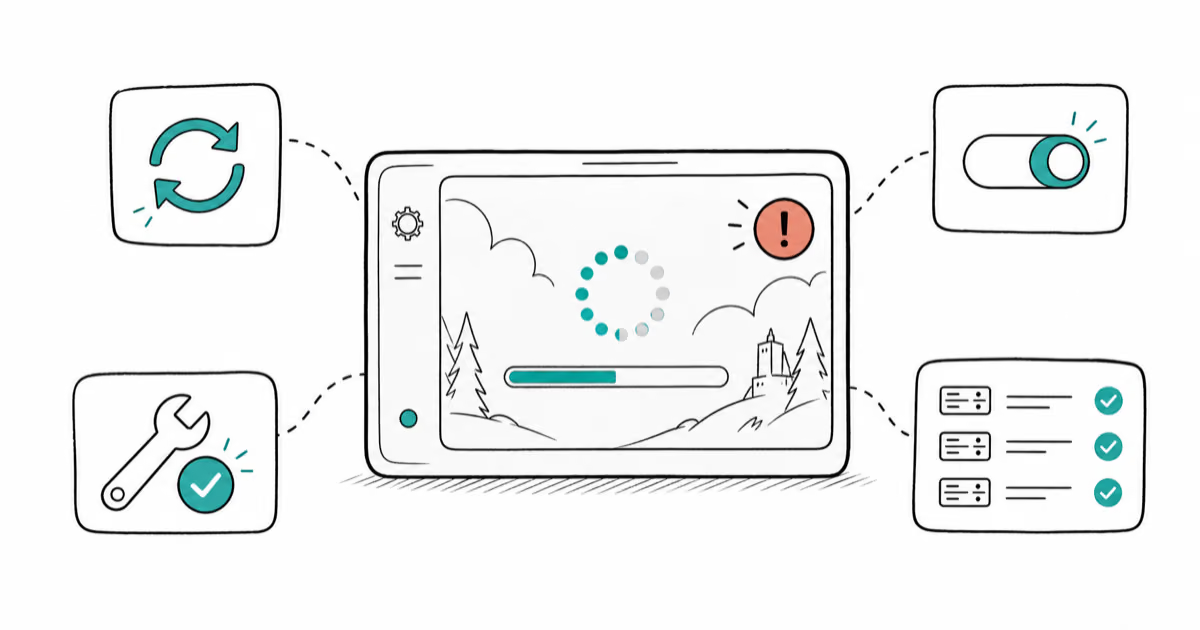
Fortnite Stuck on the Loading Screen? Fix It in 2026
Fortnite stuck on the loading screen? Check server status, fix the Windows N Media Pack and DirectX 11 on PC, clear the console cache, and verify files.
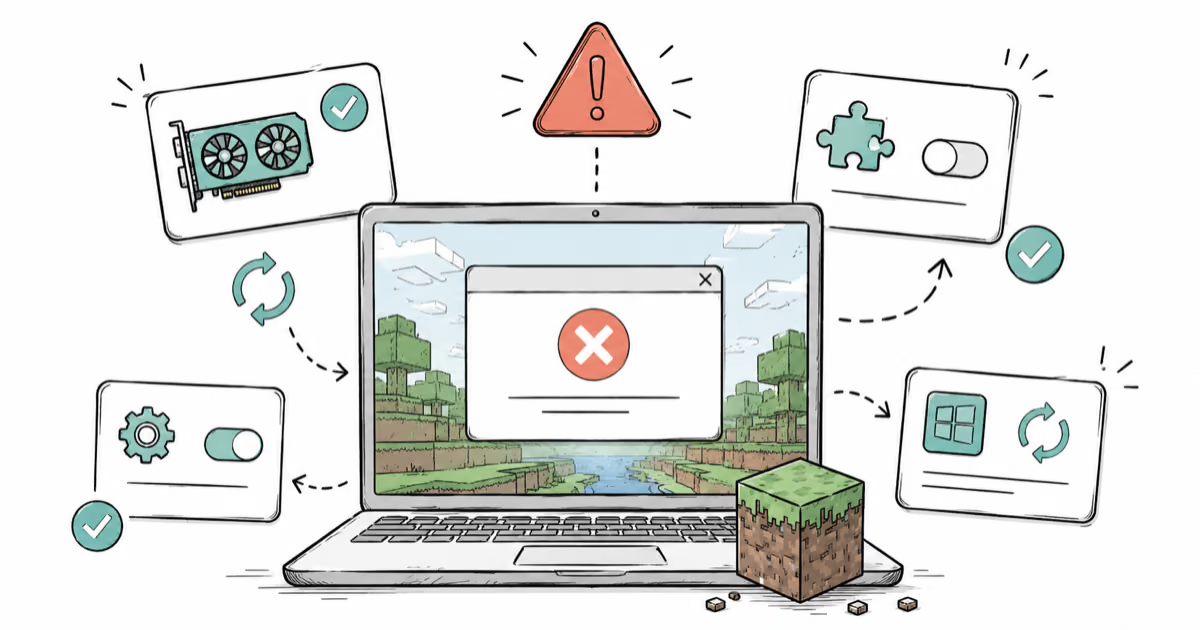
Minecraft Keeps Crashing? Java and Bedrock Fixes (2026)
Minecraft keeps crashing on startup or mid-game? Update your GPU driver, remove mods on Java, and reinstall Gaming Services on Bedrock. Fixes for both.
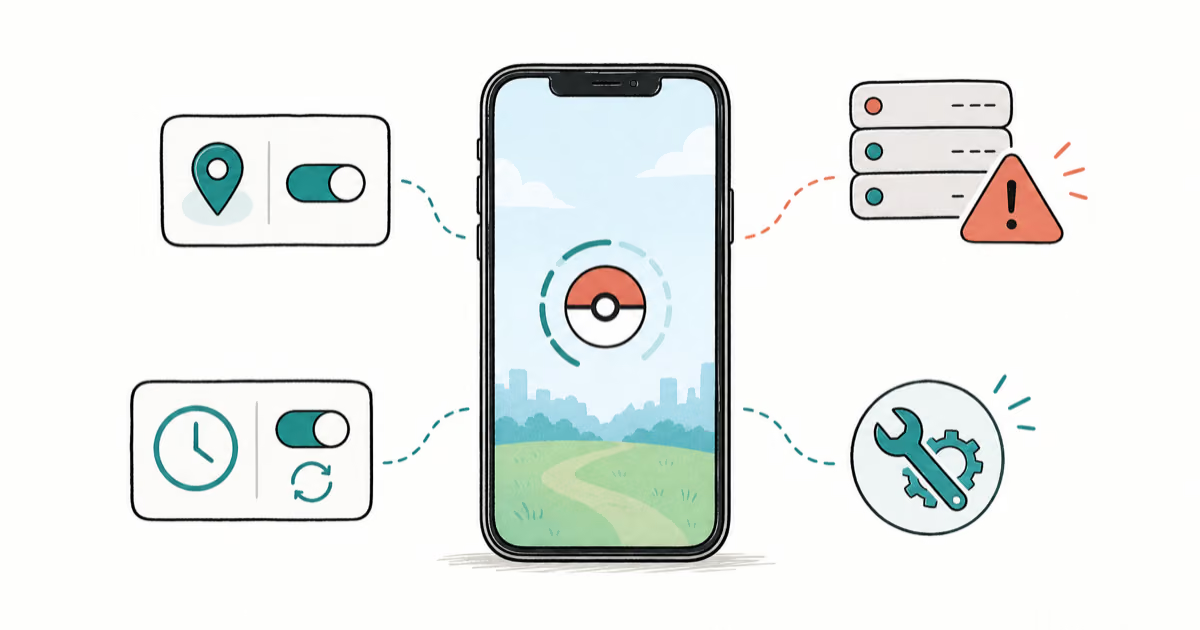
Pokemon GO Not Loading? Fix the Loading Screen 2026
Pokemon GO not loading or stuck on the Pokeball? Check server status, fix automatic date and time, grant location permission, clear the cache, and update.
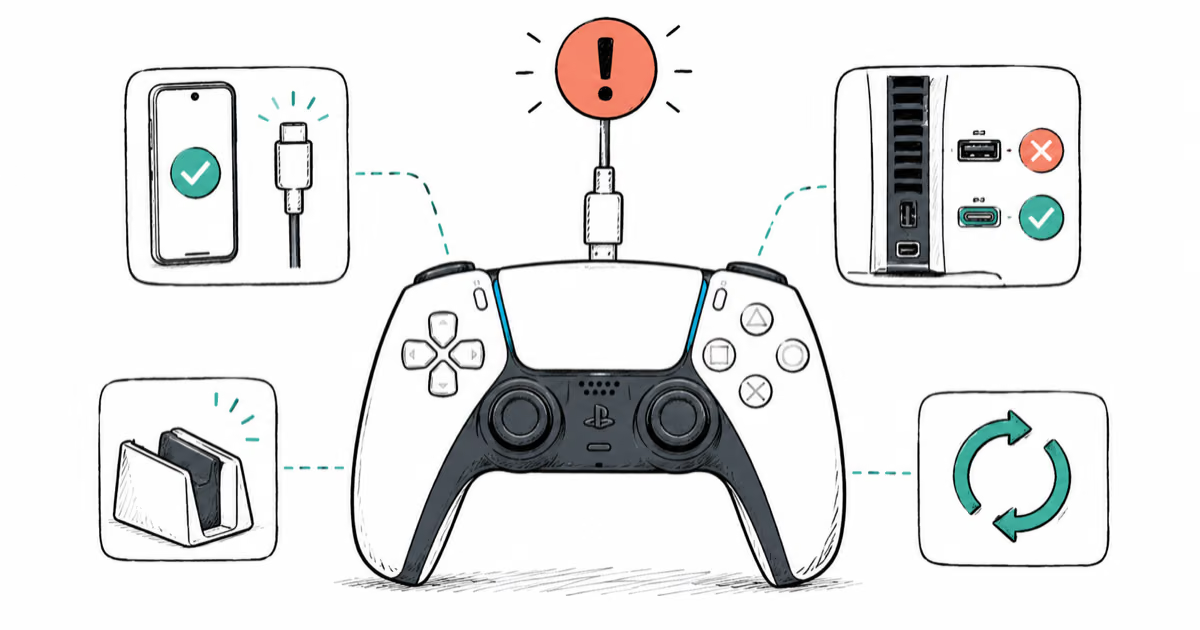
PS5 Controller Not Charging? 9 Fixes That Work (2026)
DualSense not charging? Swap the cable, use a rear port in Rest Mode, clean the USB-C port, and check power settings. 9 fixes for a dead PS5 controller.