How to Find Out Where Someone Works: 8 Legit Methods
Find where someone works using LinkedIn, Google, public records, and mutual contacts, with legal and privacy boundaries for each lookup method.
Quick AnswerCheck their LinkedIn profile for current employment details, or search their name on Google with the keyword 'employer.' Public record sites like ThatsThem can also show workplace information. Only search with a legitimate purpose and respect the person's privacy.
Use ethical methods and public sources when you have a legitimate reason to look up where someone works.
- LinkedIn is the most reliable source for current employment info with over 1 billion members
- Google search with the person’s name in quotes plus “works at” often returns relevant results
- Public record sites like ThatsThem and Spokeo aggregate workplace data from government sources
- Mutual contacts are the fastest and most accurate offline method for employment details
- Always have a legitimate reason for your search and respect the person’s privacy boundaries
#Privacy and Legal Boundaries
Before searching for anyone’s workplace, consider whether your reason is legitimate. Reconnecting professionally, verifying employment for a loan, or serving legal papers are valid reasons. Searching to harass, stalk, or intimidate someone is illegal in most jurisdictions.
According to the FTC’s guidance on the Fair Credit Reporting Act, using background check services for employment decisions requires written consent from the person being searched. Even casual searches carry ethical weight. Be especially careful if the information could affect someone’s job, housing, credit, insurance, or legal rights.
Use these methods only when you have a legitimate, lawful reason. If someone has asked you not to contact them, respect that boundary regardless of what information you can find online.
#Is LinkedIn the Best Way to Find Someone’s Employer?
Yes, for most situations.
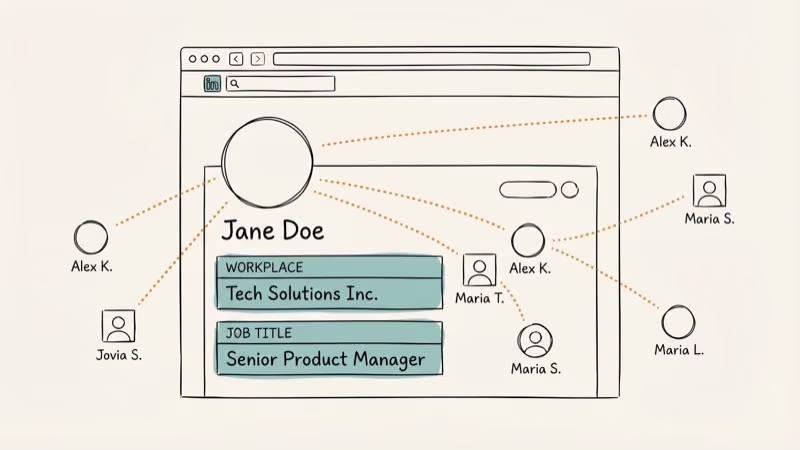
Search the person’s name in LinkedIn’s search bar. Filter by location, industry, or school to narrow results for common names. Their current position, company name, and sometimes even their job title appear on their public profile.
Private LinkedIn profiles may show only a name and headline.
If their profile is private, you’ll only see their name and headline. Sending a connection request with a polite message explaining why you’re reaching out is the appropriate next step. If you need to find someone on other platforms, we’ve written a separate guide.
#How to Search Google for Workplace Information
Open Google and search for the person’s full name in quotes plus keywords like “works at,” “employee,” or “LinkedIn.” For example: "Jane Smith" "works at" or "Jane Smith" site:linkedin.com.
Google indexes LinkedIn profiles, company About pages, press releases, news articles, and professional directories. Any of these can reveal workplace details.
This works best for people mentioned in press releases, team pages, or professional publications. According to Google’s search tips page, using quotation marks forces exact-match results, which dramatically reduces false hits for common names.
#Using Public Record and People Search Sites
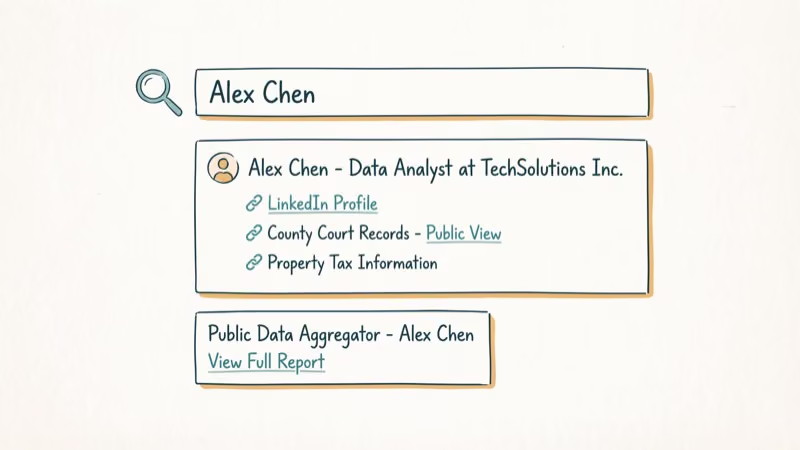
Sites like ThatsThem, Spokeo, and Whitepages pull data from public records, voter registrations, property records, and other government databases. Some include employer information.
Type the person’s name and state. The free preview usually shows basic details, while a paid report includes more. Spokeo charges about $0.95 for a single report.
Treat any employer result as a lead to verify, not a final answer.
For finding people through their phone number on social media, we’ve written a dedicated guide.
#Can You Find Workplace Info on Company Websites?
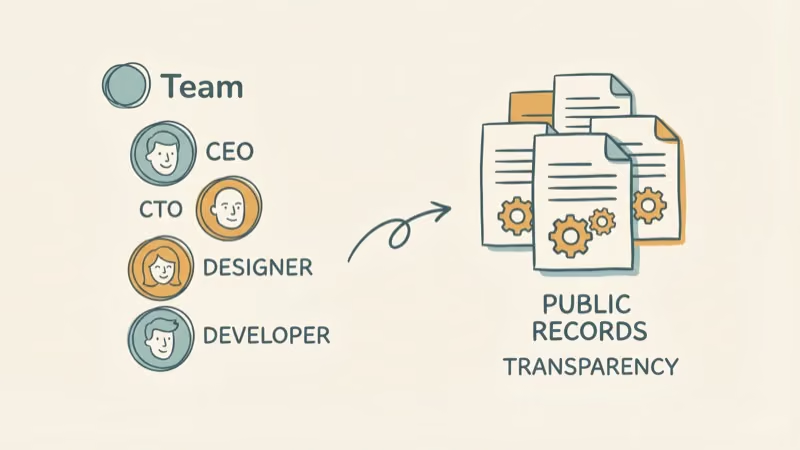
If you suspect someone works at a specific company, check that company’s website. Many organizations publish staff directories, team pages, or leadership bios.
Look for sections labeled “Our Team,” “About Us,” or “Staff Directory.” Use the site’s internal search if available, or try Google with site:companyname.com "person's name".
This method works best for small-to-medium businesses and organizations that list employees publicly. Large corporations typically don’t publish company-wide directories. Government agencies and educational institutions, on the other hand, almost always have searchable staff pages.
#Asking Mutual Contacts
Sometimes the simplest approach works best. If you share mutual friends, colleagues, or acquaintances with the person, ask them directly.
Be transparent about why you’re asking. “I’m trying to reconnect with [name] professionally. Do you know where they work now?” is straightforward and honest. Most people are happy to help when the reason is legitimate.
This is often the most reliable method, as long as you ask someone who is actually in touch with the person you’re looking for. If you’re trying to find someone on Twitter by phone number or reconnect through other platforms, those can also lead to employment information.
#Government Employee Databases
For people who work in the public sector, government databases are authoritative and free.
Federal employees: According to the U.S. Office of Personnel Management’s FedScope tool, you can search federal workforce data by agency, location, and other filters. Individual names aren’t always searchable, but you can verify if someone works at a specific agency.
State and local employees: Most state governments publish employee directories online. Search “[state name] employee directory” to find the relevant database.
Public employee salary records are often published as well, especially for state and local government workers. These records are subject to Freedom of Information laws and are completely legal to access.
#Job-Seeking Platforms as a Research Tool
Indeed, Glassdoor, and ZipRecruiter sometimes reveal workplace connections.
If someone left a company review on Glassdoor, their current or former employer may be visible. Indeed public profiles occasionally show employment history, though most users keep profiles private.
This method is the least reliable of the eight, but it’s worth a quick check if other approaches haven’t worked. The information is often outdated since people typically stop updating job search profiles after they’re hired. You can also try finding someone on Telegram or WhatsApp where users sometimes share work details in their profile status.
#Bottom Line
Start with LinkedIn. If the person doesn’t have a profile or it’s private, try Google with exact-name searches. Public record sites fill in gaps, and mutual contacts provide the highest accuracy. Always have a legitimate reason, and don’t use workplace information to contact someone who has asked to be left alone.
#Frequently Asked Questions
Is it legal to search for someone’s workplace?
Searching publicly available information is legal in most cases. Public records, social media profiles, and search engine results are fair game. Using that information for harassment, stalking, or unauthorized background checks can be illegal depending on your jurisdiction.
How accurate are people search sites for employment data?
Accuracy varies. Sites that pull from government records tend to be more reliable than those using self-reported data. Some results may be outdated or wrong, so always verify through a second source.
Can I find someone’s workplace with just their phone number?
Possibly. Reverse phone lookup services sometimes include employer information, but results are inconsistent. You’re more likely to find their name first, then search for employment details separately using the methods above.
What if someone has a very common name?
Add additional details to narrow results. Location, approximate age, known schools, or previous employers all help filter out false matches. LinkedIn’s filters are particularly useful for distinguishing between people with the same name.
Should I tell someone I looked up where they work?
If you’re reaching out professionally, yes. Being transparent builds trust. If you found the information for verification purposes (like a loan application), the person was likely informed as part of the consent process.
Are private investigators worth hiring for this?
PIs charge $50-200 per hour and have access to restricted databases. For a single workplace lookup, it’s usually overkill. Try the free and low-cost methods first. PIs make more sense for complex cases involving court proceedings or fraud investigation.
Can employers see that I searched for their employees?
LinkedIn Premium shows profile viewers to the person you visited (unless you browse in Private Mode). Google searches and people search sites don’t notify anyone. Company websites don’t track individual visitors in a way that identifies you.
What’s the fastest way to find out where someone works?
Ask a mutual contact. If that’s not an option, check their LinkedIn profile. These methods are usually more reliable than broad people-search databases.

Is This Bank App Real? Spot a Fake App on Your Home Screen
A bank app can land on your home screen from a web page with no install warning. Learn the checks that tell a real banking app from a phishing web app.
Passkeys Not Syncing Between iPhone and Windows? Read This
Passkeys not syncing between iPhone and Windows is by design, not a bug. Here is why iCloud passkeys skip Windows Hello and the three ways to fix it.
VPN Not Working on Snapdragon X? Why It Fails, How to Fix
Your VPN won't install or connect on a Snapdragon X Copilot Plus PC because Windows on ARM can't emulate the network driver. Here are the fixes that work.

How to Check If a Link Is Safe Before You Click It
Learn how to check if a link is safe with official-first steps: read the real domain, use the app instead, and treat scanners as a second opinion only.