8 Best Games Like Detroit: Become Human for PS4 and PC
Games like Detroit: Become Human: 8 interactive dramas with branching stories, tough choices, and multiple endings. Top picks for PS4 and PC.
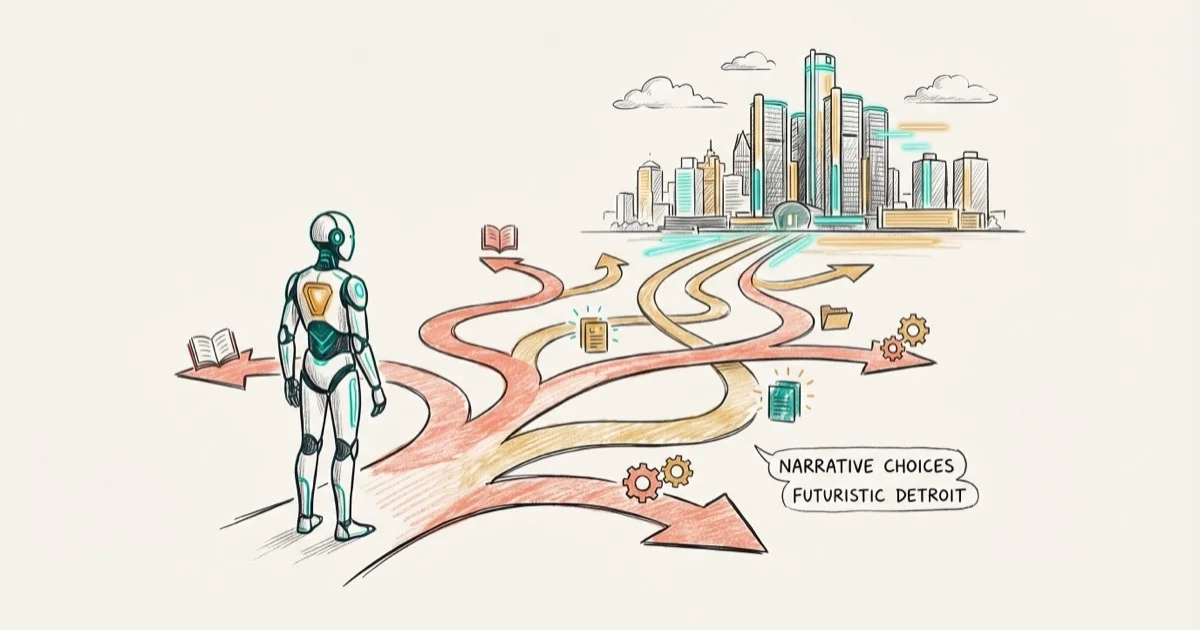
Quick AnswerThe best games like Detroit: Become Human are Heavy Rain, Life Is Strange, and Until Dawn. Each one shares branching narratives, meaningful player choices, and multiple endings that reshape every character's fate.
Games like Detroit: Become Human are rare because few studios attempt Quantic Dream’s blend of cinematic direction, dense branching, and permadeath. The eight picks below all deliver branching narratives and multiple endings on PS4 and PC.
- All 8 titles run on PS4 and PC, so the full list is playable on either platform
- Heavy Rain is the closest match because Quantic Dream built both games on the same engine
- Until Dawn lets all eight main characters die permanently, with no reload option
- Life Is Strange rewinds time, letting you preview a consequence before committing to it
- Tell Me Why is free on Xbox and PC, making it the lowest-cost entry on the list
#What Makes Detroit: Become Human’s Storytelling Unique?
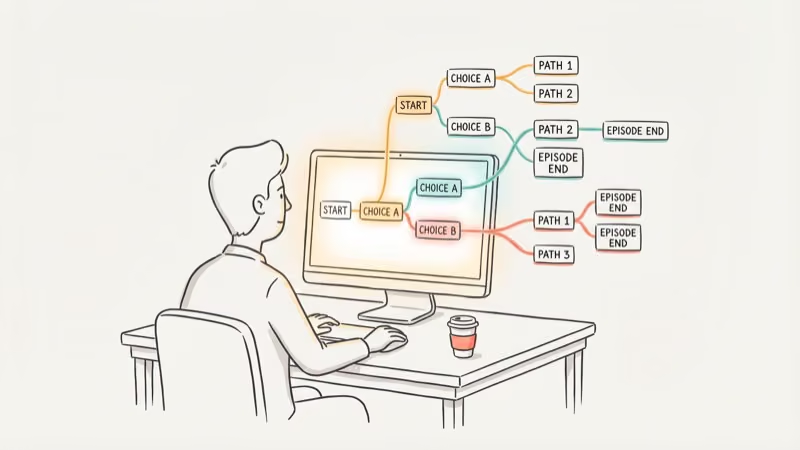
Detroit: Become Human follows three android protagonists (Connor, Kara, and Markus) through a near-future uprising. According to the PlayStation Blog’s Detroit launch overview, Quantic Dream director David Cage framed the project as a story where the plot “changes depending on who lives and who dies.” Markus alone has multiple distinct endings, plus dozens of mid-chapter branches most players never reach without a walkthrough open on a second screen.
The flowchart is the hook.
Most narrative games hide their branching structure, but Detroit shows exactly where your choice diverged from the path the developers anticipated. A second run down the “deviant Connor” path usually surfaces closed nodes the first playthrough never touched.
Decisions here do more than change cutscenes. They reshape relationships between characters, close entire storylines, and determine who survives the final act. IGN’s Detroit: Become Human review confirms that the first playthrough runs long enough to feel like a complete story on its own, which is why replays feel like discovering an entirely different game. If you want a co-op-heavy follow-up next, look at games like A Way Out.
#Quantic Dream Titles That Match Detroit’s Formula
#Heavy Rain
Heavy Rain is the closest match because Quantic Dream built both games on the same engine and design philosophy. You control four characters investigating the Origami Killer, a serial murderer who drowns victims during heavy rainfall. Any of the four protagonists can die permanently, and the story continues without them — losing a character partway through rewrites every remaining scene rather than triggering a game over.
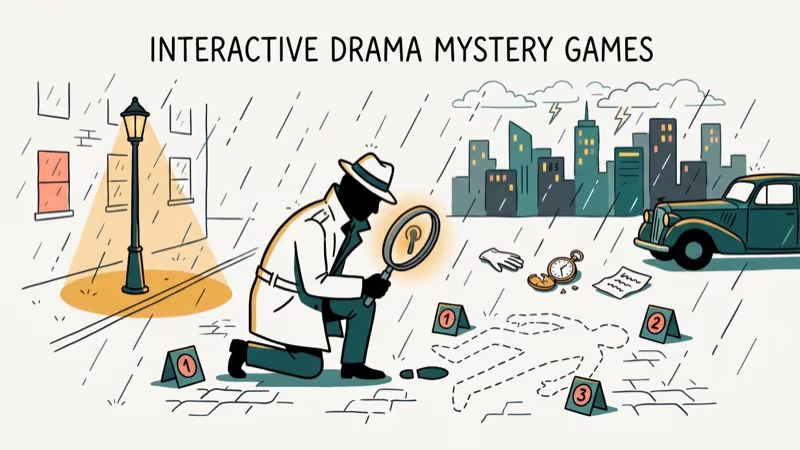
Heavy Rain is on PS4 and on PC through the Epic Games Store.
The PC port still shows occasional quick-time prompts tied to the PlayStation button layout, so a controller is the less frustrating option. The game reliably lands at the top of most Quantic Dream rankings. The permadeath system remains unusually brave for a mainstream title, and the Norman Jayden storyline alone has been dissected in essays and video retrospectives more than almost any other Quantic Dream plotline.
#Beyond: Two Souls
Beyond: Two Souls follows Jodie Holmes from childhood to adulthood as she grows up psychically linked to an invisible entity named Aiden. You switch between Jodie’s physical interactions and Aiden’s supernatural abilities, which gives every scene two possible solutions. The non-linear chapter structure means you experience Jodie’s life out of order, piecing the full timeline together as you play.
Local co-op is the best-kept secret here.
Beyond: Two Souls has a cooperative mode where a second player takes full control of Aiden while the first controls Jodie. The co-op mode needs no setup menu, because the game detects a second controller automatically once Aiden is on screen.
#Fahrenheit (Indigo Prophecy)
Quantic Dream’s earliest interactive drama follows Lucas Kane after he commits a murder while seemingly possessed. You play both the fugitive and the two detectives hunting him. Wikipedia’s entry on Quantic Dream confirms that Fahrenheit released in 2005 and pioneered mechanics Detroit refined more than a decade later, including the split-screen cut that shows multiple characters converging on the same location. The full studio catalog is on Wikipedia’s Quantic Dream page.
The Remastered version runs on modern Windows through Steam and usually sits under ten dollars during sales. Quick-time events drive most action scenes, and the third act famously goes off the rails in a way no later Quantic Dream game has matched.
#Horror Games That Track Detroit-Style Branching
#Until Dawn
Supermassive Games built Until Dawn around a butterfly effect system that tracks hundreds of small decisions. Eight friends trapped in a mountain lodge can all survive or all die depending on how you play. The PlayStation Store product page for Until Dawn’s standard edition describes the story as one where “every choice has a consequence,” with branching paths that continue even if a character is killed on-screen.

The “everyone dies” route runs in a single session of roughly seven hours, and the game handles every death cleanly, including the one that leaves a character bleeding out off-screen in Chapter 9.
If you also loved the quick-time horror angle, the deeper cut is games like Until Dawn, and the post-apocalyptic fans should head to games like The Last of Us.
#Oxenfree
Night School Studio’s supernatural thriller drops a group of teenagers on an island where they accidentally open a ghostly rift. Dialogue runs in real time, so conversations keep moving whether you respond or stay silent. That one mechanic changes every social scene because silence is itself an answer.
Oxenfree II: Lost Signals expanded the formula in 2023 with a new cast, a connected storyline, and radio puzzles that reach back into the first game.
Both entries run on PC, PS4, Xbox One, Switch, iOS, and Android. The hand-painted art style looks nothing like any other game here, which helps if you are burned out on Quantic Dream’s photoreal direction. The radio-tuning mechanic that drives most puzzles stands alone among interactive dramas.
#Which Episodic Narrative Games Are Worth Playing?
#Life Is Strange
Life Is Strange gives protagonist Max Caulfield the ability to rewind time. That single mechanic changes how you approach every conversation because you can always test the “honest” answer first and back out if it lands badly. The five-episode structure means your decisions compound across roughly fifteen hours of playtime, and the final episode forces a choice that invalidates the rewind entirely — a gut-punch that no Quantic Dream game has quite matched since.
Real-world themes like bullying and mental health ground the supernatural premise.
PC Gamer’s Life Is Strange review recommends it as a standout in the narrative-adventure genre and singles out the writing as the reason the series has held up a decade later. If Max’s vibe pulls you in, try games like Fable for British-flavored fantasy next.
#The Wolf Among Us
Telltale Games adapted the Fables comic book series into a noir detective story where fairy tale characters live disguised in 1980s New York. You play as Bigby Wolf investigating murders in Fabletown. The cel-shaded art makes every scene feel like a pulled panel, and the choices lean harder into “who do you punch” than Detroit does. For more story-driven recommendations, see games like Episode.
The Wolf Among Us is on PS4, Xbox, PC, Switch, and mobile. A long-delayed sequel, The Wolf Among Us 2, is in active development at Telltale, with no final release date announced yet.
#Tell Me Why
Dontnod Entertainment built Tell Me Why around twins Alyson and Tyler Ronan returning to their childhood home in Alaska. The game explores memory and identity, letting both siblings recall shared events differently. Xbox’s Tell Me Why store page confirms the game is free to own and play on Xbox consoles and Windows PC, and it remains the only fully free entry on this list.
Fans of psychological mysteries will also want to look at games like Danganronpa, which leans more into whodunit structure than family drama.
#Platform Availability and Pricing Compared
Most titles on this list started as PlayStation exclusives and then moved to PC. Life Is Strange runs on everything from PS4 to Android phones, and Tell Me Why stays the budget champion at zero dollars on Xbox and PC.
During a typical Steam sale, Heavy Rain, Beyond: Two Souls, Fahrenheit, and The Wolf Among Us all drop under six dollars each. That makes it reasonable to clear four of the eight for under twenty-five dollars total.
Controller support matters more than it looks.
On PC, Heavy Rain and Beyond: Two Souls still show PlayStation glyphs even with an Xbox controller, which makes a few quick-time events confusing until you learn the mapping. If you plan to play either on PC, keep a DualShock or DualSense on hand.
#Tips for Choosing Your Next Interactive Drama
Start by asking what you liked most about Detroit.
If cinematic direction was the draw, Heavy Rain or Beyond: Two Souls is the next stop because they share the same engine. If it was the branching itself, Until Dawn and Life Is Strange offer the deepest decision trees outside Detroit.
Horror fans should go straight to Until Dawn or Oxenfree. Anyone who wants zero action and pure dialogue should pick Tell Me Why or Life Is Strange. If you are coming off a heavier title and want a breather, Fahrenheit is the shortest of the Quantic Dream catalog and the easiest to finish in a weekend.
#Bottom Line
Play Heavy Rain next if you want the closest possible match to Detroit: Become Human. It’s the only other Quantic Dream title where four playable characters can die permanently and the game keeps going. If budget is the main concern, Tell Me Why is free on Xbox and PC and delivers a three-chapter story with no ads, microtransactions, or sequel-bait cliffhanger.
Until Dawn is the pick for anyone who wants tracked micro-decisions, because its butterfly effect menu surfaces causation in a way Detroit’s flowchart hints at but never states outright.
#Frequently Asked Questions
Are most of these games available on both PS4 and PC?
Yes. Every title on this list now runs on PC in addition to its original PlayStation release. Heavy Rain, Beyond: Two Souls, and Detroit itself launched as PlayStation exclusives before moving to Steam and the Epic Games Store. Life Is Strange and Tell Me Why have the widest platform coverage, spanning PS4, Xbox, PC, mobile, and in Life Is Strange’s case, Nintendo Switch.
Can you replay these games for different endings?
Yes, you can.
Detroit includes a built-in chapter select with a flowchart that marks every unexplored path. Every title on the list supports replaying from specific decision points, although Heavy Rain and Until Dawn make you finish the first run before the chapter select unlocks. Tell Me Why, Life Is Strange, and The Wolf Among Us all let you replay any episode at any time.
Which game here is the most emotionally intense?
Heavy Rain and Life Is Strange rank as the most emotionally demanding. Heavy Rain’s child-abduction storyline hits particularly hard in the middle chapters. Life Is Strange builds attachment to its cast over five episodes before forcing a devastating choice in the finale that no replay can really soften.
Are there any free games similar to Detroit: Become Human?
Tell Me Why is free on Xbox and Windows PC through the Microsoft Store, with all three episodes included. Life Is Strange’s first episode is often free on Steam during seasonal promotions.
Do these games require fast reflexes or action game skills?
No.
Interactive dramas prioritize decision-making over mechanical skill. Quick-time events appear in Heavy Rain and Until Dawn, but the input windows are forgiving. Life Is Strange and Tell Me Why have no action sequences at all, which makes them the easiest entries for players who prefer dialogue over combat.
What upcoming narrative games should fans watch for?
Quantic Dream’s next project is Star Wars Eclipse.
The studio’s signature branching narrative set in the Star Wars universe is what the teaser trailer promised, with combat and pilot sequences that nothing in their back catalog has attempted before. Supermassive Games keeps releasing entries in The Dark Pictures Anthology roughly every twelve to fifteen months, plus the Until Dawn-style follow-up The Quarry. Don’t Nod’s announced Life Is Strange: Double Exposure and Lost Records: Bloom & Rage keep the episodic adventure category healthy through 2026.
Is Detroit: Become Human worth playing in 2026?
Yes. The PS4 version still runs at a stable frame rate on PS5 through backward compatibility, and the Steam version supports 4K and uncapped frame rates on modern GPUs. The story itself has aged well because the android-civil-rights framing is not tied to any specific real-world tech trend, so it reads as allegory rather than dated prediction.
Fortnite Stuck on the Loading Screen? Fix It in 2026
Fortnite stuck on the loading screen? Check server status, fix the Windows N Media Pack and DirectX 11 on PC, clear the console cache, and verify files.
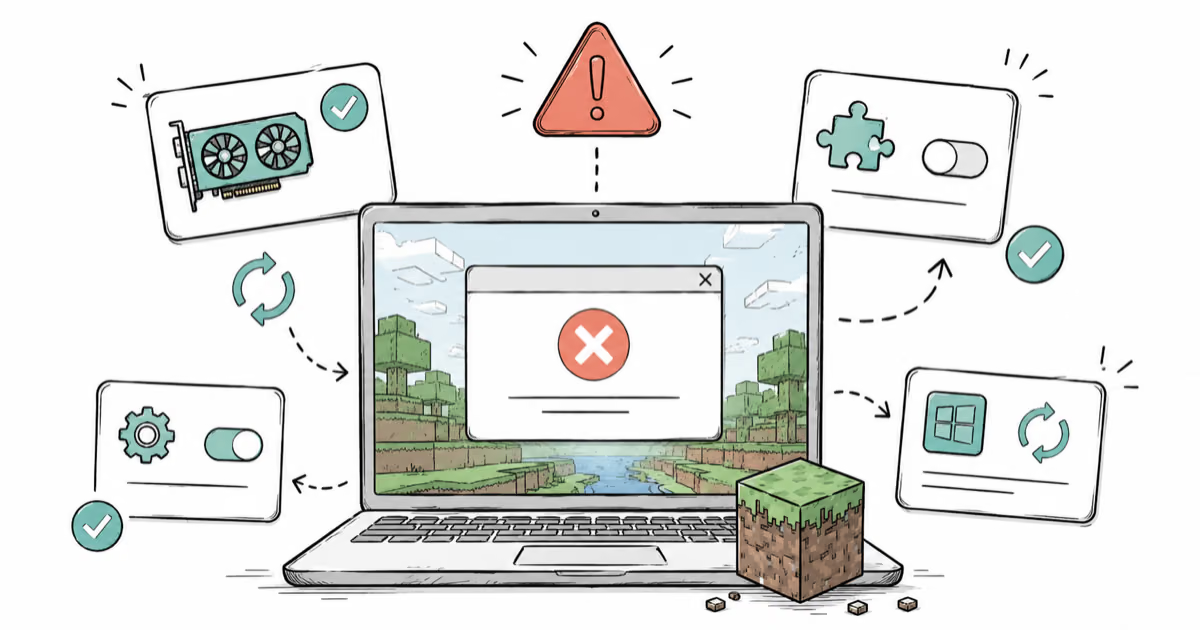
Minecraft Keeps Crashing? Java and Bedrock Fixes (2026)
Minecraft keeps crashing on startup or mid-game? Update your GPU driver, remove mods on Java, and reinstall Gaming Services on Bedrock. Fixes for both.
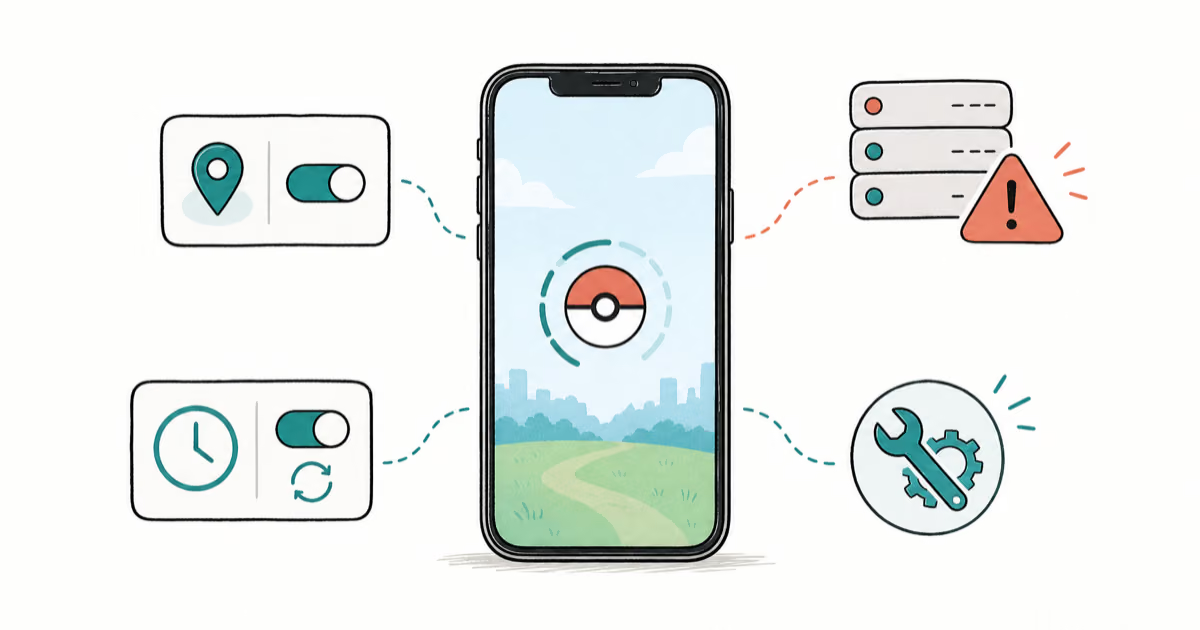
Pokemon GO Not Loading? Fix the Loading Screen 2026
Pokemon GO not loading or stuck on the Pokeball? Check server status, fix automatic date and time, grant location permission, clear the cache, and update.
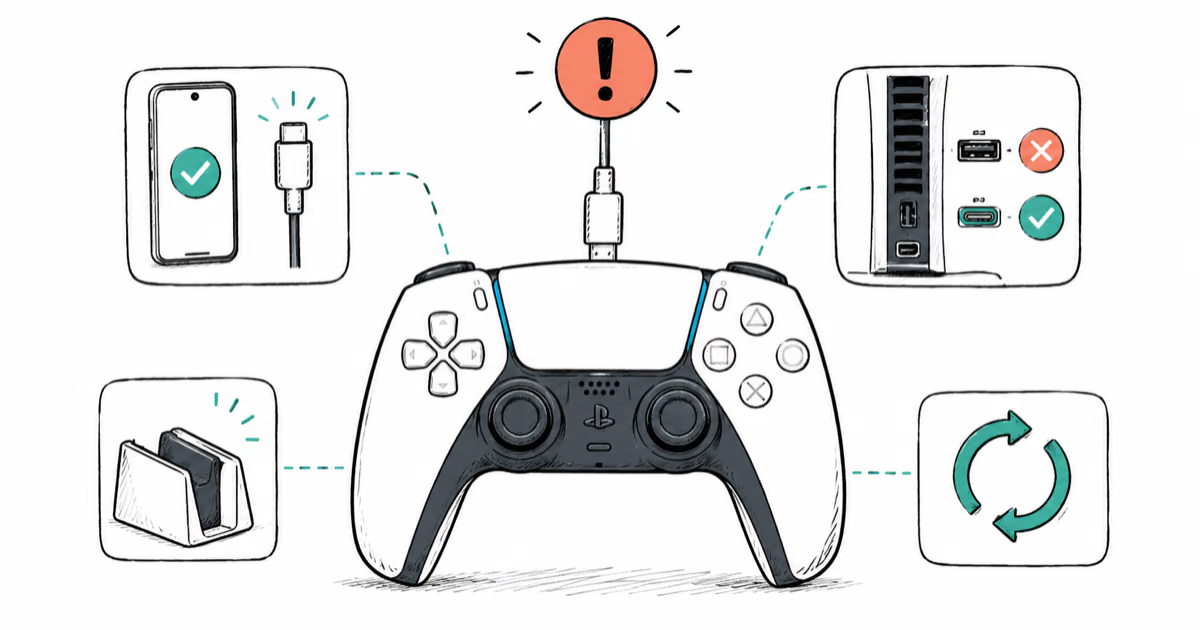
PS5 Controller Not Charging? 9 Fixes That Work (2026)
DualSense not charging? Swap the cable, use a rear port in Rest Mode, clean the USB-C port, and check power settings. 9 fixes for a dead PS5 controller.