Top 10 Chinese Gambling Games: Rules and How to Play
Explore the top 10 Chinese gambling games including Mahjong, Ban Luck, Sic Bo, and Chor Dai Di. Learn the rules, history, and how each game is played.
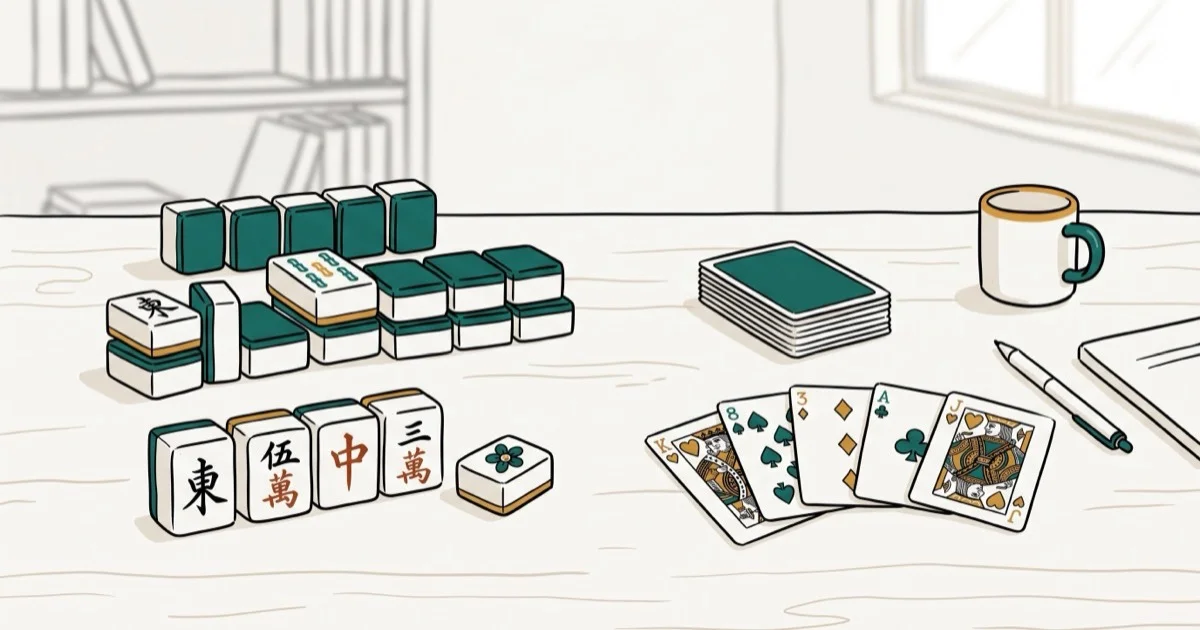
Quick AnswerThe most popular Chinese gambling games are Mahjong, Ban Luck (Chinese Blackjack), Sic Bo, Chinese Poker, and Chor Dai Di. Mahjong uses 144 tiles across 4 players. Ban Luck targets 21 points. Sic Bo bets on dice outcomes.
Chinese gambling games have been played for over a thousand years, and several of them remain fixtures at family gatherings, festivals, and casinos across Asia today. The list covers tile games, card games, and dice games rooted in Chinese culture.
- Mahjong uses 144 tiles across 4 players and is the most culturally significant game on this list
- Ban Luck (Chinese Blackjack) is most popular during Chinese New Year across Singapore and Malaysia
- Sic Bo and Big and Small are the same dice game, found in Macau casinos worldwide
- Chinese Poker uses 13-card hands split into 3 groups, unlike Texas Hold’em
- Most games on this list mix skill and luck, unlike purely chance-based Western slots
#Overview of Chinese Gambling Game Categories
Three categories: tile games, card games, and dice games. Each has a different structure and skill level.
Tile games like Mahjong and Si Se Pai use dedicated tile sets and involve significant memory and pattern-recognition skill. Sessions last 45 minutes to 2 hours.
Card games (Ban Luck, Chinese Poker, Chor Dai Di, Ngau) use standard decks with modified rules.
Dice games like Sic Bo and Yu Ha Hai are purely luck-based. They’re simple to learn but carry house edges that favor the banker in every round.
#The History of Chinese Gambling Games
Gambling has deep roots in Chinese culture going back over 1,000 years. According to Britannica’s overview of gambling history, tile-based games like Mahjong emerged from Chinese domino traditions dating to the 10th century, while Chinese playing cards from the 9th century Tang dynasty represent the earliest known form of card gaming worldwide. Card games developed in parallel, with Chinese playing cards documented in the 9th century Tang dynasty.
Chinese gambling games spread across Southeast Asia through diaspora communities, reaching Malaysia, Singapore, and the Philippines by the 19th century. Many games carry regional variants: Ban Luck is particularly associated with Singapore and Malaysia, while Chor Dai Di (also called Big Two) is widely played in Hong Kong and Taiwan. For mobile gaming options beyond traditional formats, adult games for Android covers card and casino-style apps available on Google Play.
Key categories:
- Tile games: Mahjong, Si Se Pai
- Card games: Chinese Poker, Ban Luck, Chor Dai Di, In-Between, Ngau
- Dice games: Sic Bo (Big and Small), Yu Ha Hai
#Are These Games Available as Apps?
Yes, all major games have digital versions. Our best board game apps guide covers mobile implementations.
#How Do You Play the Top Chinese Gambling Games?
#1. Mahjong
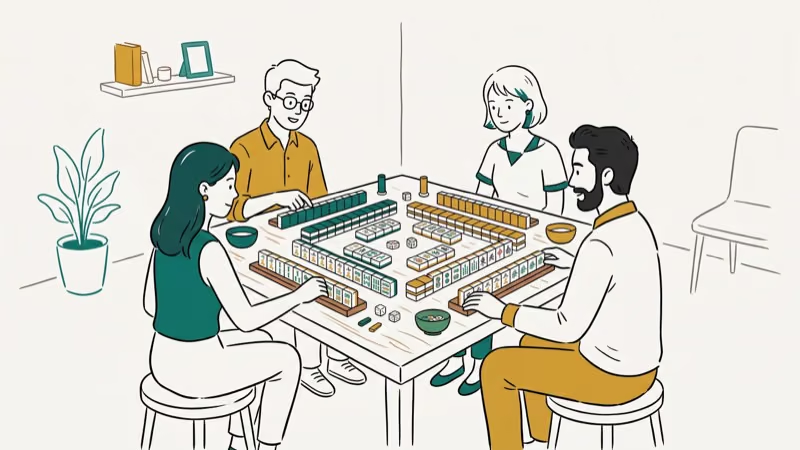
Mahjong is a tile-based game for 4 players using a set of 144 tiles. Each player starts with 13 tiles. The goal is to build a winning hand of 14 tiles consisting of 4 melds (sets of 3 tiles each) and 1 pair (the “eye”).
How to play: Players take turns drawing a tile from the wall and discarding one. You win by completing your hand before other players. A meld is either a pung (3 identical tiles), a kong (4 identical tiles), or a chow (3 consecutive tiles in the same suit).
According to Wikipedia’s Mahjong article, competitive Mahjong standardizes 16 winning hand patterns. Regional variants modify these substantially.
Mahjong rounds often run longer than quick dice or shedding-card games because players must build melds, track discards, and wait for a complete hand.
#2. Ban Luck (Chinese Blackjack)
Ban Luck is the Chinese New Year variant of Blackjack, most commonly played in Singapore and Malaysia. Like standard Blackjack, the goal is to reach 21 points or as close as possible without exceeding it.
Key differences from standard Blackjack:
- Any player can be the banker, not just the house
- Players who reach exactly 15 points in their first 2 cards may surrender
- Special hands carry multiplied payouts:
- Ban Luck (Ace + 10-value card): 2x the bet
- Ban Ban (two Aces): 3x the bet
- 7-7-7: 7x the bet
- Dragon (5 cards totaling ≤21): 2x the bet
Card values: Cards 2 to 9 are face value. 10, J, Q, and K are each worth 10 points. Aces count as 1 or 11. Any player with 16 or more points in their starting cards must stand unless they choose to surrender at exactly 15.
#3. Sic Bo (Big and Small)
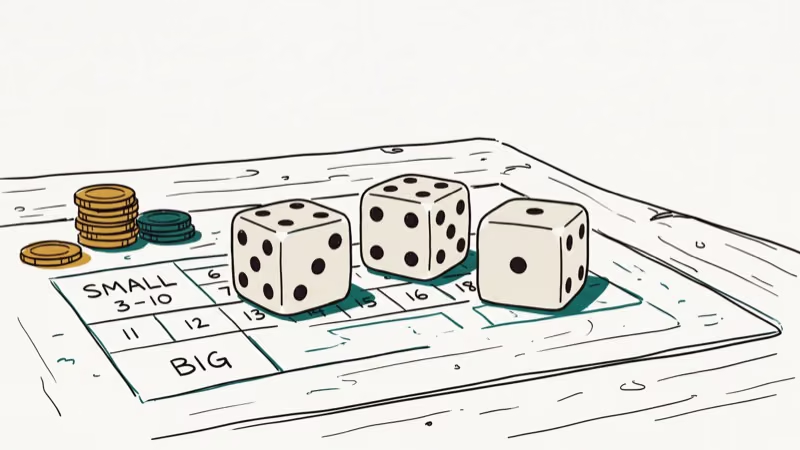
Sic Bo is pure chance. Three dice, a covered cup, players bet before the reveal. Zero skill involved.
Main bets: Big (total 11 to 17, pays 1
), Small (total 4 to 10, pays 1), Specific triple (all 3 dice identical, pays 180 in most casinos), and Specific total (bet on the exact sum of all 3 dice).According to Macau’s Gaming Inspection and Coordination Bureau, Sic Bo accounts for a notable share of all live table game bets placed in Macau annually, making it the third most popular live table game after Baccarat and Roulette. Arcade-style gambling machines in Asian gaming halls often simulate Sic Bo mechanics — our arcade sports games guide explains how these cabinet designs work across different game types.
#4. Chinese Poker
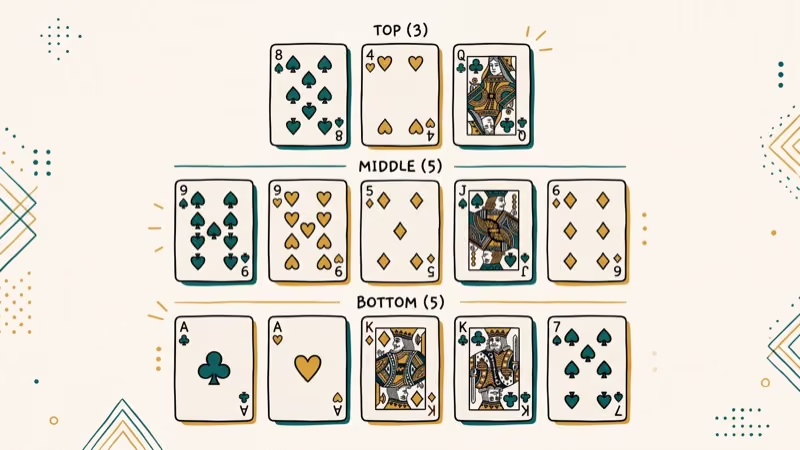
Chinese Poker is a card game for 4 players using a standard 52-card deck. Each player receives 13 cards and must arrange them into 3 hands: a back hand of 5 cards, a middle hand of 5 cards, and a front hand of 3 cards. The back hand must be the strongest, the front hand the weakest.
How scoring works: Each player compares hands against every other player’s matching hand. Win or lose 1 unit per comparison.
Chinese Poker rewards players who already understand hand rankings, because the main challenge is arranging 13 cards efficiently across 3 groups. That skill element makes it very different from games like Sic Bo, where the dice outcome is random.
#5. Chor Dai Di (Big Two)
Chor Dai Di (Big Two) is a shedding game: 4 players, 13 cards each, first to play all cards wins.
How to play: Players must beat the previous play with a higher-ranked single card, pair, or combination. The 2 of Spades is the highest-ranked single card. Combinations include pairs, triples, and 5-card combinations (straights, flushes, full houses, four of a kind, straight flush).
Chor Dai Di is especially popular in Hong Kong and Taiwan. In online gaming platforms, it’s commonly available under the name “Big Two” alongside games like Monument Valley that have also crossed over into mainstream digital platforms.
#6. In-Between (Between the Sticks)
In-Between deals 2 face-up cards, then players bet whether a third card falls between them in value.
How the payout works: If the third card lands between the two values, the player wins the amount bet. If it matches one of the two cards, the player pays double. If it falls outside, they pay once. The risk-reward ratio is highest when the gap between the two cards is wide.
#7. Ngau (Ox)
Ngau, also called Niu Niu in Mainland China, is a card game for 2 to 10 players plus a dealer. Each player receives 5 cards. The goal is to find a combination of 3 cards that totals a multiple of 10 (the “passport”). The remaining 2 cards determine the hand strength.
Key rule: If a player can’t form a passport, they have no Ngau and lose. The highest Ngau is a triple Ox (three 10-value cards as the passport with the remaining 2 cards also totaling 10).
#8. Si Se Pai (Four Color Cards)
Si Se Pai uses a 112-card deck in 4 Chinese chess colors. Each suit has 28 cards.
Objective: Similar to Mahjong, players aim to build a winning hand. Every card in the hand must form a valid group (a complete chess set from any suit).
#9. Yu Ha Hai (Fish-Prawn-Crab)
Yu Ha Hai, also known as Ketam-Ketam in Malaysia, is a board game played with 3 dice that feature pictures rather than numbers. The board shows 6 symbols: Fish, Prawn, Crab, Rooster, Coin, and Gourd.
How to play: Players place bets on one or more symbols. The dealer shakes 3 dice in a covered cup and reveals them. If the symbol you bet on appears on 1, 2, or 3 dice, you win 1x, 2x, or 3x your bet respectively. It’s a pure luck game with no skill element.
#10. Pachinko
While technically Japanese in origin, Pachinko is widely played in Chinese gaming establishments. Players launch steel balls into an upright pinball machine, aiming to hit targets that trigger ball multipliers. The balls are exchanged for prizes or tokens.
According to the Japan Amusement Industry Association’s 2023 data, the Pachinko sector generates substantial revenue annually in Japan, making it one of the largest gaming industries in the world.
#Key Differences Between Chinese and Western Gambling Games
Chinese gambling games tend to be player-vs-player rather than player-vs-house, which changes the math significantly. In games like Chinese Poker and Chor Dai Di, skilled players can gain a genuine long-term edge because there’s no house margin built in. Compare that to Western slot machines or Roulette, where the house always has a statistical advantage regardless of skill.
Mahjong shares this skill-based structure. Expert players consistently outperform beginners over long sessions in ways that pure luck games don’t permit. This is why Mahjong tournaments attract competitive players and prize pools, and why many jurisdictions classify it separately from purely chance-based gambling.
Dice games like Sic Bo and Yu Ha Hai sit at the other end of the spectrum. The outcomes are entirely random, and the only strategic element is choosing bets with the lowest house edge.
#Tips for Playing Chinese Gambling Games
A few principles apply across these games regardless of type:
Learn the rule variants before you sit down. Ban Luck rules vary significantly between families and regions. Mahjong has dozens of regional rulesets. Confirm which version is being played before betting.
Understand the house edge. Sic Bo’s Big/Small bets carry a 2.8% house edge. Chinese Poker has no house edge because it’s player vs. player. That distinction matters enormously for long-term results: a 2.8% edge means losing $2.80 per $100 wagered on average, every session.
Set a budget before playing. This is standard advice for all gambling activities, but it’s especially relevant for games like In-Between and Ban Luck where individual rounds can end very quickly and stakes can escalate.
#Bottom Line
Mahjong and Ban Luck are the most culturally embedded Chinese gambling games, both tied to specific festivals and family traditions. Sic Bo is the most accessible for newcomers because the rules take under 5 minutes to learn. Chinese Poker is the most strategically deep. If you’re exploring mobile versions, our family games app guide covers digital implementations of several games on this list.
#Frequently Asked Questions
What is the most popular Chinese gambling game?
Mahjong is the most culturally significant. Sic Bo leads in commercial casinos, accounting for a notable share of live table volume in Macau.
Is Ban Luck the same as Blackjack?
Ban Luck uses the same 21-point target as Blackjack but differs significantly. The banker rotates among players, not just the house. Surrender is available at exactly 15 points. And special hands carry multiplied payouts that standard Blackjack doesn’t recognize, including Ban Ban (two Aces) at 3x and the 7-7-7 combination at 7x the bet.
Can I play Chinese gambling games online?
Yes. Mahjong has both social and real-money versions on iOS and Android. Sic Bo appears in virtually every online casino serving Asian markets. Chinese Poker has dedicated apps.
Always verify that online gambling is legal in your jurisdiction before playing for money.
How many tiles are in a standard Mahjong set?
144 tiles total: 36 bamboo, 36 circle, 36 character, 16 wind tiles, 12 dragon tiles, and 8 flower and season tiles. Some regional variants add bonus tiles.
What is the difference between Big Two and Chor Dai Di?
Big Two and Chor Dai Di are the same game. Chor Dai Di is the Cantonese name commonly used in Hong Kong, while Big Two is the English translation used on digital platforms and in Singapore.
Is Pachinko considered a gambling game?
In Japan, Pachinko sits in a legal gray area: players win tokens, not cash, then exchange tokens for prizes at separate locations. This indirect exchange structure keeps it technically outside Japan’s gambling laws. Outside Japan it’s classified differently, usually as an arcade game. The legal status varies significantly by country.
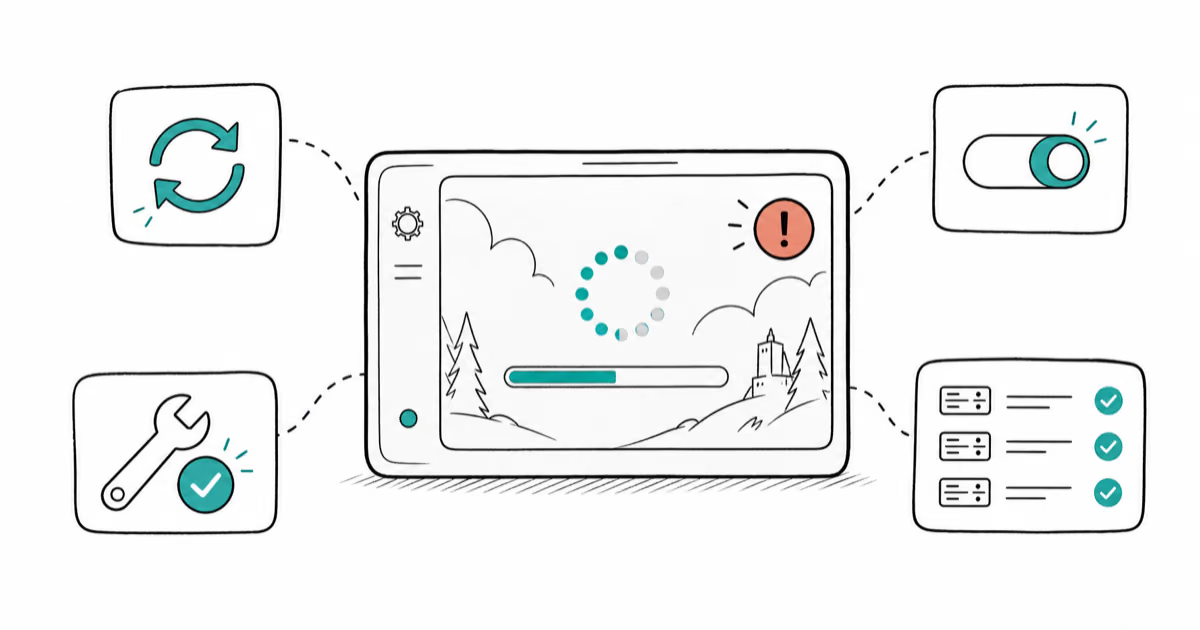
Fortnite Stuck on the Loading Screen? Fix It in 2026
Fortnite stuck on the loading screen? Check server status, fix the Windows N Media Pack and DirectX 11 on PC, clear the console cache, and verify files.
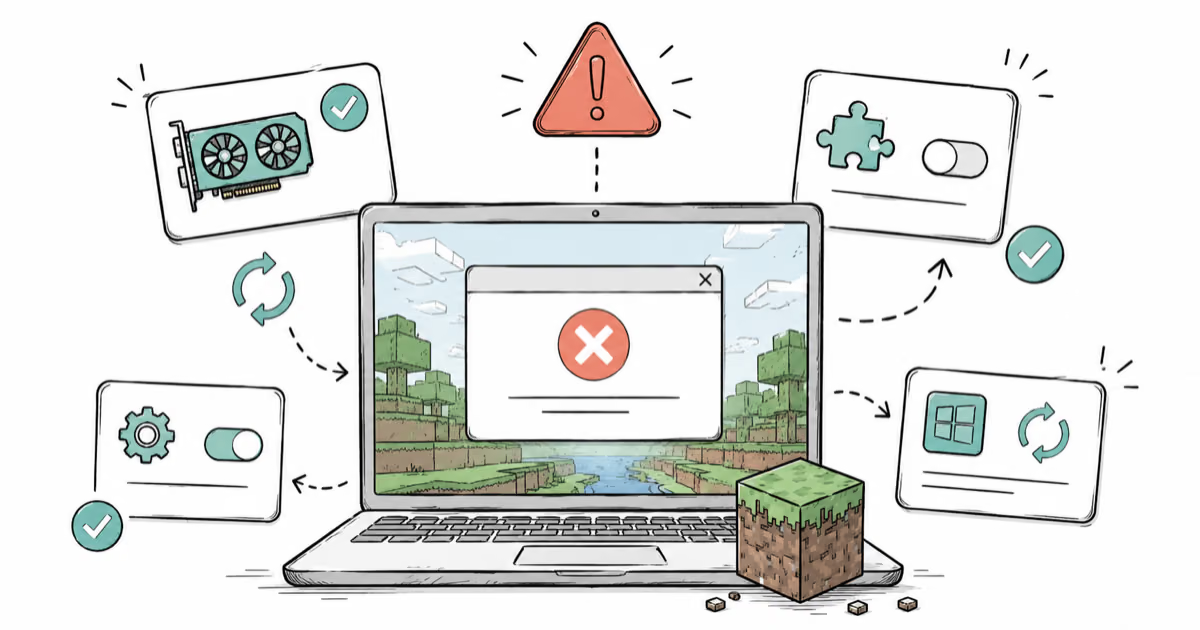
Minecraft Keeps Crashing? Java and Bedrock Fixes (2026)
Minecraft keeps crashing on startup or mid-game? Update your GPU driver, remove mods on Java, and reinstall Gaming Services on Bedrock. Fixes for both.
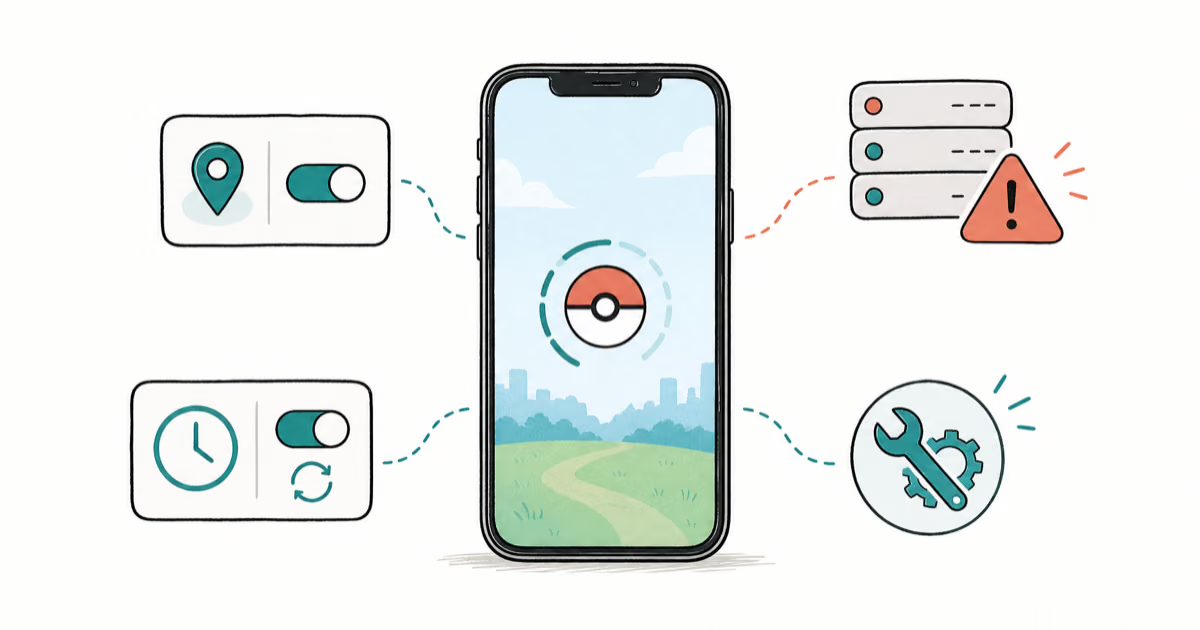
Pokemon GO Not Loading? Fix the Loading Screen 2026
Pokemon GO not loading or stuck on the Pokeball? Check server status, fix automatic date and time, grant location permission, clear the cache, and update.
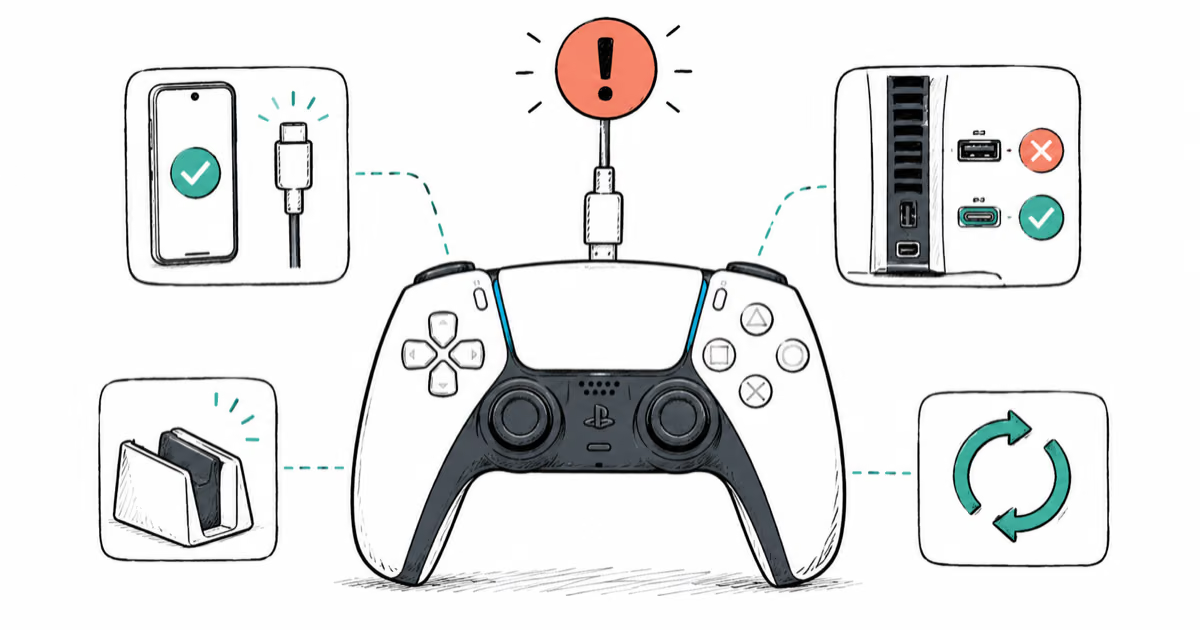
PS5 Controller Not Charging? 9 Fixes That Work (2026)
DualSense not charging? Swap the cable, use a rear port in Rest Mode, clean the USB-C port, and check power settings. 9 fixes for a dead PS5 controller.