Best Cameras Under $400: 7 Proven Budget Picks (2026)
Best cameras under $400 in 2026: 7 picks across DSLR, mirrorless, and compact, compared by image quality, video capability, and overall value.
Quick AnswerThe Canon EOS Rebel SL3 is the best camera under $400 for most people. It shoots 4K video, weighs just 11 oz, and has a fully articulating touchscreen. For action shots, the Sony a6000 (used, around $200) beats everything at this price with 11 fps burst and 179-point autofocus.
The best cameras under $400 can shoot 4K, track fast subjects, and produce photos worth printing large. This guide compares seven models across DSLR, mirrorless, and point-and-shoot categories to find which ones actually earn their price.
- Canon EOS Rebel SL3 is the best all-around pick: 4K video, 24.1MP APS-C sensor, world’s lightest DSLR at 449g
- Sony a6000 (used, $200-$300) has the fastest autofocus at this price: 179 AF points, 11 fps burst
- APS-C sensors outperform 1/2.3-inch compacts in low light by roughly 2 stops
- A 32GB V30 SD card ($10) is the first accessory to buy with any camera here
- Used camera bodies on eBay and Amazon Renewed save 30-50% with no loss in image quality
#Camera Types Compared: DSLR, Mirrorless, and Compact
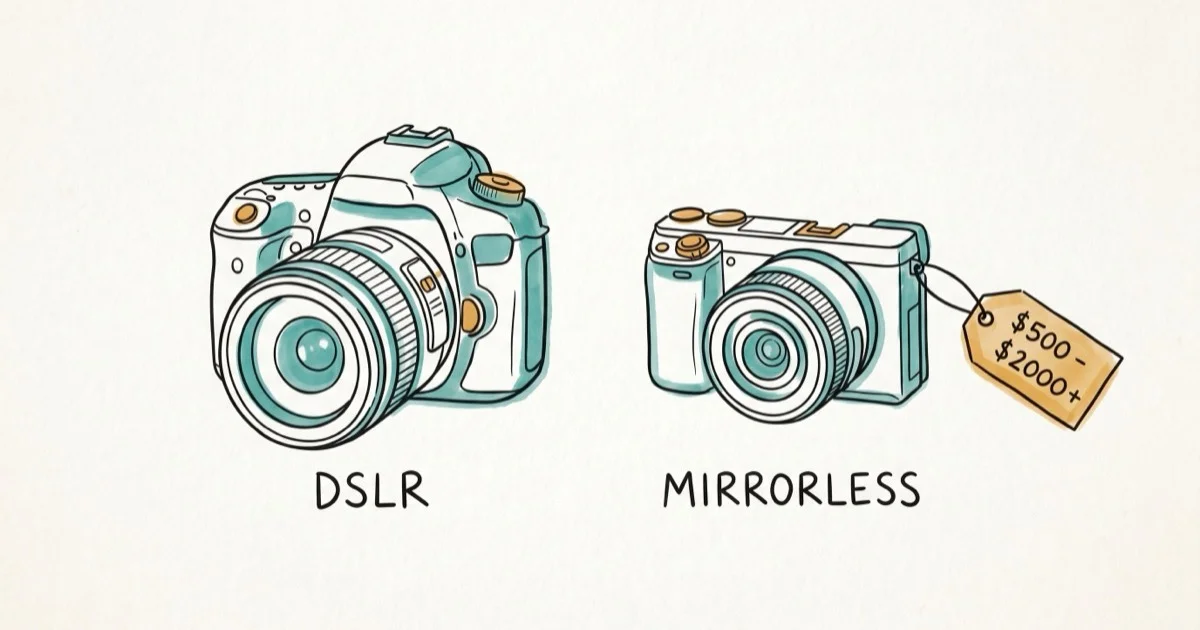
Your shooting style matters more than the brand. Each of the three types has a clear use case. According to Wikipedia’s digital camera overview, digital cameras capture images with an electronic image sensor, so sensor size and lens ecosystem remain core buying criteria.
DSLRs win on battery life. The Canon Rebel SL3 is rated for around 270 shots per charge in live-view mode, and far more through its optical viewfinder. Cheap glass helps too: Canon EF lenses start at $50 used, and the system has decades of affordable primes and zooms behind it for when you want to expand past the kit lens.
Mirrorless cameras like the Sony a6000 are faster. At 11 fps with 179-point phase-detection AF locking in 0.06 seconds, it outpaces any DSLR in this price range. Battery life drops to 360 shots per charge. That’s a significant tradeoff for long shooting days.
Point-and-shoot cameras suit photographers who want zero complexity and maximum portability. The Panasonic Lumix ZS80 fits in a jacket pocket, zooms to 720mm equivalent, and connects to your phone via Bluetooth for automatic photo transfers. It does all of this for under $400, which makes it one of the most practical all-in-one travel cameras available. According to Imaging Resource’s sensor database, the 1/2.3-inch sensor loses sharpness above ISO 800, so plan accordingly for indoor use.
#The 7 Best Cameras Under $400
#Canon EOS Rebel SL3: Best DSLR Overall
The SL3 is the world’s smallest and lightest DSLR. At 449g with a fully articulating touchscreen, it shoots like a modern camera rather than a relic from 2015. Key specs: 24.1MP APS-C sensor, 4K video (cropped), and Dual Pixel autofocus for smooth tracking in video mode.
Compared with the older T7i, the SL3’s newer sensor and processor hold up better at high ISO, with less smearing in shadow areas around ISO 3200. Canon’s Dual Pixel AF tracks faces without hunting, which makes it especially reliable for video.
One limitation: the SL3’s 4K is cropped to 1.6x. A 24mm lens becomes 38mm effective. Wide-angle 4K shooters should look at the Sony a6100 instead.
As an Amazon Associate, fone.tips earns from qualifying purchases. Some links on this page are affiliate links.
#Nikon D3500: Best Battery Life
The D3500 shoots 1550 shots per charge. No other camera under $400 gets close. That matters when you’re shooting a full-day event or hiking trip without reliable charging access.
Specs: 24.2MP APS-C sensor, ISO 100-25600, 5 fps burst, 1080p video at 60 fps. Guide Mode walks new users through settings like aperture and shutter speed with on-screen explanations. It’s practical for anyone moving past Auto mode without reading a manual. The main tradeoffs are no 4K video and no articulating screen.
#Sony Alpha a6000 (Used): Best Mirrorless Value
New, the a6000 regularly pushes past $400. Used on eBay or Amazon Renewed, clean bodies sell for $200-$280. The performance at that price is exceptional: 24.3MP APS-C sensor, 179-point hybrid autofocus, and 11 fps burst shooting in a body smaller than most compact cameras.
In continuous burst mode, the 179-point phase-detection system locks onto moving subjects and keeps nearly every frame sharp. No camera under $400 tracks motion better.
No 4K video. For video, pick the Canon SL3.
#Canon PowerShot G7 X Mark II: Best Compact for Video
The G7 X Mark II has a 1-inch sensor, which is four times larger than the 1/2.3-inch sensors in most compacts. That difference matters in practice: usable ISO range extends from 800 to 3200, and you get background separation in portrait shots that smaller-sensor compacts can’t produce.
Travel vloggers pick it because the whole camera fits in a coat pocket. Specs: 20.1MP, f/1.8-2.8 lens (24-100mm equivalent), 1080p/60fps video, no viewfinder. According to DPReview’s compact camera testing, the 1-inch sensor class is the sweet spot between portability and image quality.
#Panasonic Lumix ZS80: Best Zoom Range
30x optical zoom in a pocket-sized body. The 24-720mm range handles anything from wide group shots to distant wildlife. The built-in electronic viewfinder is rare at this price and makes outdoor shooting much easier than using a screen in sunlight.
Specs: 20.3MP 1/2.3-inch sensor, 4K video via pixel binning, Bluetooth and Wi-Fi. Small sensor means noise above ISO 400. For travel photography with maximum zoom range in minimum space, nothing on this list matches it.
#GoPro HERO11 Black (Refurbished): Best Action Camera
Refurbished GoPro HERO11 Black units sell for $300-$380 from GoPro’s official store with a 1-year warranty. The HERO11 shoots 5.3K/60fps video with a 1/1.9-inch sensor larger than previous GoPro models. The front LCD screen and HyperSmooth 5.0 stabilization are clear improvements over the HERO9 or HERO10. Waterproof to 33 feet without a housing.
Nothing at this price range competes for action sports. Before buying, check our guide to best microSD cards for GoPro Hero cameras since a V30-rated card is required for 5.3K recording.
#Fujifilm Instax Mini 40: Best Instant Camera
At around $80, the Instax Mini 40 costs well under the $400 budget, but it earns a spot for one specific audience: anyone who wants physical prints on the spot. The retro design, auto exposure, and selfie mode make it the most approachable instant camera Fujifilm makes.
Film costs about $0.75 per print. According to Fujifilm’s Instax Mini 40 product page, the lens is fixed-focus at 0.6m and beyond, so it won’t work for macro shots. The prints are credit-card-sized (62x46mm) and last 100 or more years if stored away from direct light.
This isn’t a camera for photographers who want control. It’s a camera for parties, events, and people who enjoy handing out prints in person.
#What to Look for in a Budget Camera
Six factors matter. Here’s how to weight them.
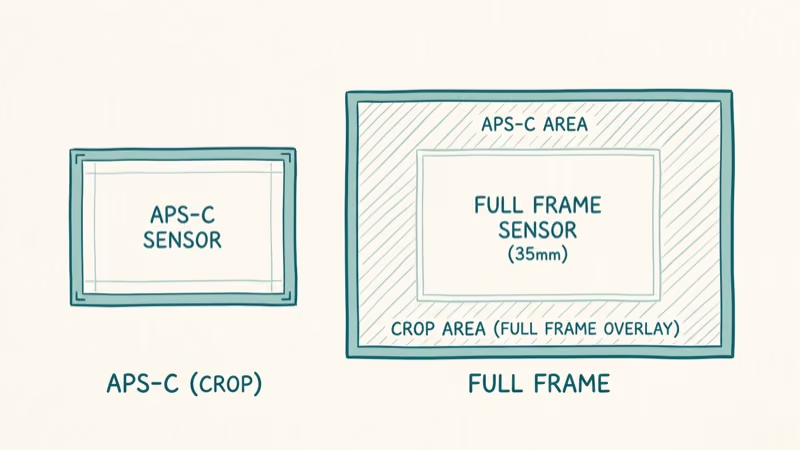
Sensor size is the most important spec for low-light shooting. An APS-C sensor (found in the Canon SL3, Nikon D3500, and Sony a6000) is about 15x larger than a smartphone sensor and roughly 7x larger than the 1/2.3-inch sensors in most compact cameras. The Canon SL3 at ISO 3200 produces clean, printable photos. The Panasonic ZS80 at the same setting shows visible grain.
Autofocus speed determines whether moving subjects come out sharp. Phase-detection AF locks faster than contrast-detection AF. For sports, kids, or pets, it’s the most important spec after sensor size.
Video capability splits into 1080p (good for social sharing) and 4K (needed for cropping in post). The Canon SL3 and Panasonic ZS80 shoot 4K. The Nikon D3500 maxes out at 1080p/60fps.
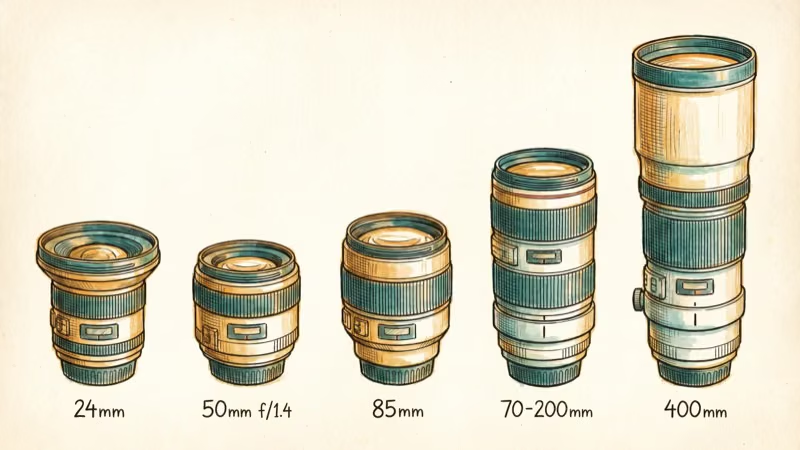
Lens compatibility matters if you plan to expand. Nikon F mount (D3500) has the largest selection of affordable used glass: portrait primes, telephoto zooms, many under $100 because the system dates to 1959. Sony E mount (a6000) has fewer budget options under $50. If you plan to buy multiple lenses over the next few years, Nikon is cheaper to build out.
Connectivity shapes how quickly you can share photos. Wi-Fi handles bulk transfers; Bluetooth keeps a persistent low-power connection for automatic syncing when you return home. The Panasonic ZS80 and Canon G7 X Mark II have both. The Nikon D3500 has Bluetooth only, which means transfers require you to open the Canon Camera Connect app manually.
Battery life. The Nikon D3500 lasts 1550 shots per charge. Mirrorless cameras average 360. On a full-day trip, that difference is significant.
#Does Sensor Size Actually Matter Under $400?
Yes, and the gap is larger than most buyers expect. Compare the Panasonic ZS80 (1/2.3-inch compact) and the Canon SL3 (APS-C DSLR) at ISO 1600 indoors and the difference is clear. The DSLR holds shadow detail across the frame, while the compact shows smearing and heavy color noise in the shadows, particularly in corners and under low-contrast lighting where detail matters most.
Physics explains it. A larger sensor captures more light per photosite, which produces less noise at the same ISO setting. According to Cambridge in Colour’s sensor size guide, upgrading from 1/2.3-inch to APS-C gives roughly a 2-stop advantage in signal-to-noise ratio.
In practice, the Canon SL3 at ISO 1600 produces similar noise levels to the Panasonic ZS80 at ISO 400. That means the SL3 can shoot usably in lighting conditions where the compact produces grainy images you wouldn’t want to print or share.
Daylight photographers won’t notice much. APS-C wins everywhere else. Both the Sony a6000 (used, $200-$380) and Canon SL3 are APS-C.
#Which Budget Camera Is Right for Your Shooting Style?
For sports and action, buy the Sony a6000 used. Nothing else in this price range matches 11 fps with 179-point phase-detection AF.
Portrait and family photographers should pick the Canon SL3. Its Dual Pixel face-tracking AF stays locked on even when kids are running, which makes it dependable for busy family events.
Travel photographers should look at the Canon G7 X Mark II. It fits in a coat pocket and handles low light better than any 1/2.3-inch compact. The Panasonic ZS80 is the pick if zoom range matters more than low-light quality.
Beginners who want to learn photography properly should start with the Nikon D3500. Guide Mode walks you through every setting with on-screen explanations, the 1550-shot battery means you won’t run out during a day of shooting, and the Nikon F lens system gives you room to grow. Compare options at lower price points in our best cameras under $300 guide if you want to spend less.
#How to Save on Camera Gear Without Compromising Quality
Buy used for the camera body.
Camera bodies hold up well mechanically: a used Sony a6000 from 2016 shoots the same 24.3MP files it did when new. Lenses, sensors, and shutters don’t degrade the way software does. The used market on eBay, Amazon Renewed, and MPB is reliable for bodies with under 20,000 shutter actuations.
New only for memory cards and batteries. Counterfeit SD cards are common in third-party Amazon listings. Buy SanDisk Extreme or Samsung EVO Select from authorized sellers only.
Skip kit lens upgrades for now. The 18-55mm lens included with DSLRs is good enough to learn on. When you’re ready to spend more, a used Canon 50mm f/1.8 ($75) will improve your portrait photos more than any camera upgrade at this price.
#Bottom Line
Start with the Canon EOS Rebel SL3 if you want one camera that handles photos, video, and portraits well. The 4K video, Dual Pixel AF, and articulating screen make it the most complete DSLR under $400. If you shoot sports or fast-moving subjects, a used Sony a6000 is the better buy: the 11 fps burst and 179-point AF aren’t matched at this price.
For travel where pack size matters, the Canon G7 X Mark II’s 1-inch sensor gives noticeably better low-light results than any 1/2.3-inch compact. And if zoom range is the priority, the Panasonic ZS80’s 30x optical covers everything from wide landscapes to 720mm telephoto without swapping lenses.
Whatever you pick, read our best low-light video cameras guide before your first shoot. Understanding how light affects image quality will help you get more from any camera at this price.
#Frequently Asked Questions
What is the best camera under $400 for beginners?
The Canon EOS Rebel SL3 is the best option for most beginners. It has Guide Mode that explains each camera setting on-screen with clear descriptions of when and why to use it, a responsive touchscreen for intuitive menu navigation, and an articulating screen that lets you frame shots from low angles or overhead without any awkward positioning. The 24.1MP APS-C sensor produces sharp, printable photos straight out of the box without any post-processing knowledge required.
Can you get a mirrorless camera for under $400?
Yes. A used Sony a6000 sells for $200-$300 on eBay and Amazon Renewed. Sony produced it from 2014 to 2019, so the used market is large and well-priced. The 24.3MP APS-C sensor and 179-point hybrid autofocus at 11 fps beat most new cameras at this price.
Is it better to buy a DSLR or a mirrorless camera under $400?
For battery life and lens options, choose a DSLR. The Nikon D3500 lasts 1550 shots and has decades of affordable Nikon F glass behind it. For speed, choose the Sony a6000 used: 11 fps with 179-point phase-detection AF. For sports, mirrorless wins.
What camera under $400 is best for video?
The Canon EOS Rebel SL3 is the best under $400 for video. It shoots 4K, has Dual Pixel autofocus for smooth face tracking, and the articulating screen makes vlogging practical. The Canon G7 X Mark II is a solid second choice for anyone who wants a smaller body: it shoots 1080p/60fps with good optical stabilization and fits in a coat pocket.
Do you need to buy lenses separately for a DSLR?
Kit bundles include an 18-55mm lens that covers most everyday shooting. That lens gets limiting for portraits (50mm or longer is better) and sports (200mm or longer). A used Canon 50mm f/1.8 costs about $75 and noticeably improves portrait quality. For budget lens recommendations, kit lens options at lower price points work well in cameras under $300 too.
Is a point-and-shoot camera worth buying in 2026?
Yes, for one specific reason: optical zoom beyond 10x. The Panasonic ZS80 gives you 30x zoom (720mm equivalent) in a pocket. No smartphone matches that reach. In dim light, APS-C cameras outperform it, but in daylight the ZS80 is competitive.
What accessories do you need for a budget camera?
Three things to buy first: a 32GB SD card (Class 10 or V30 rated, around $10), a spare battery (about $15 for a third-party option), and a camera bag or padded case. For DSLRs, a UV filter ($15) protects the front element on the kit lens. A basic stabilizer grip ($30-$50) reduces handheld video shake noticeably. V30-rated microSD cards designed for GoPro Hero cameras also work in DSLRs.
How do cameras under $400 compare to smartphones?
DSLRs and mirrorless cameras under $400 outperform smartphones in four areas: optical zoom beyond 3x, low-light performance above ISO 800, shallow depth of field for portraits, and manual shutter control for action shots. Smartphones win on convenience, computational features like Night Mode, and instant sharing. For intentional photography where you want control over the result, a dedicated camera gives you options that software can’t fully replicate.
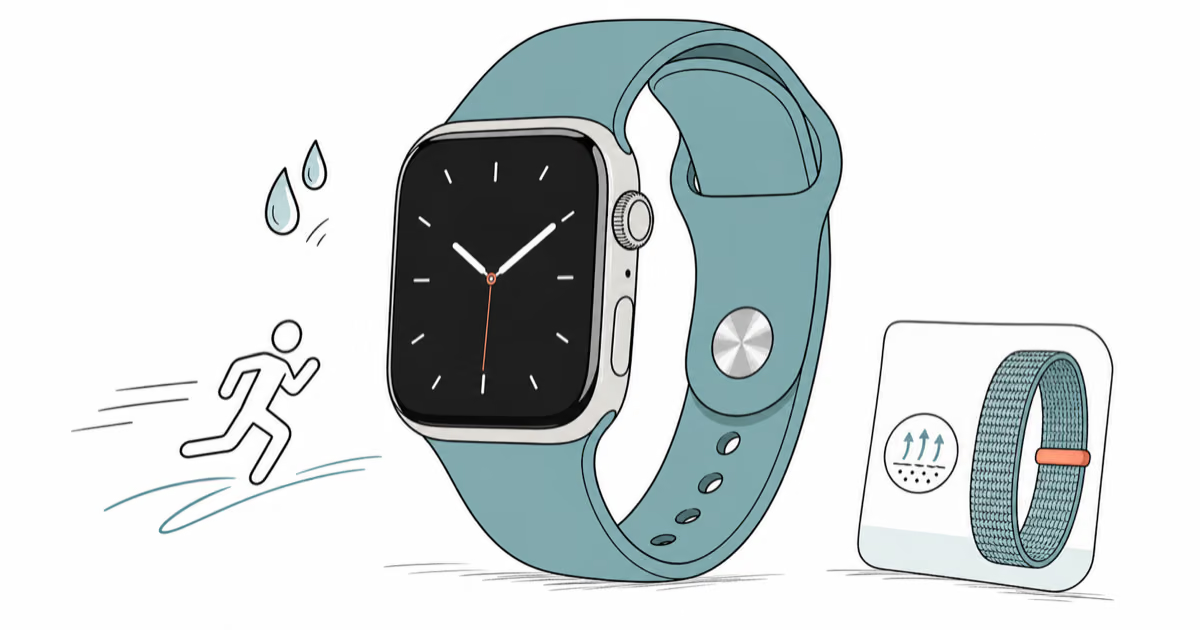
Best Apple Watch Band for Working Out: Proven Picks
The best Apple Watch band for working out handles sweat and stays put on your wrist. Compare silicone, nylon, and titanium picks for runs and lifts.
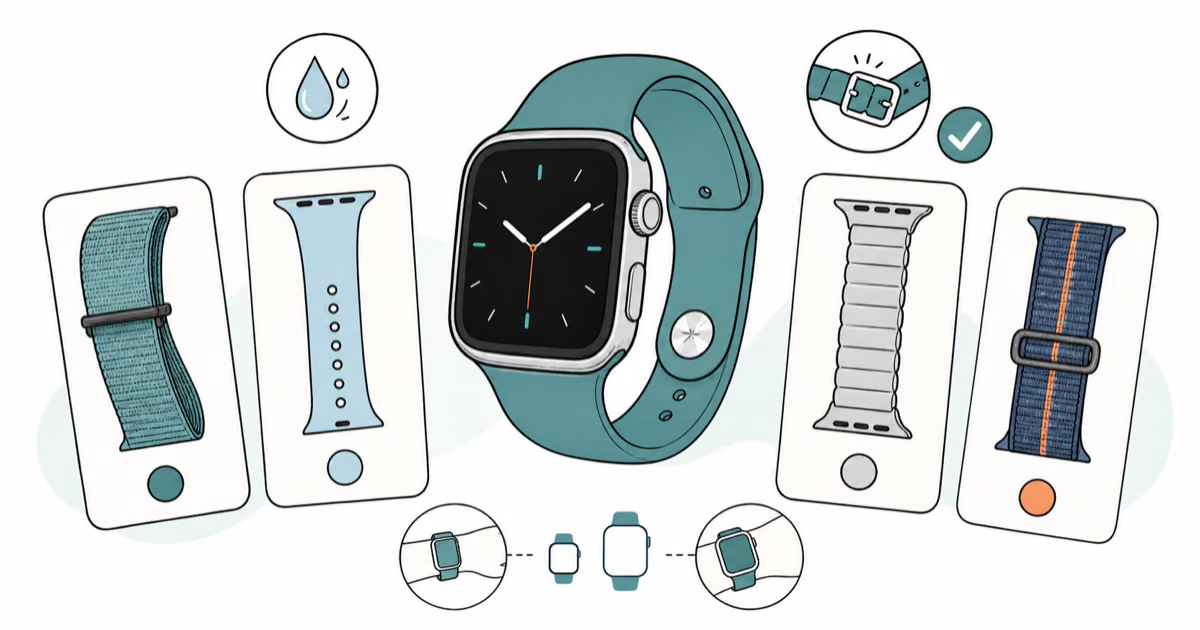
Best Apple Watch Bands: Proven Picks by Size and Style
The best Apple Watch bands depend on your case size group first, then your use. Compare silicone, nylon, stretchy, and steel picks for the right fit.
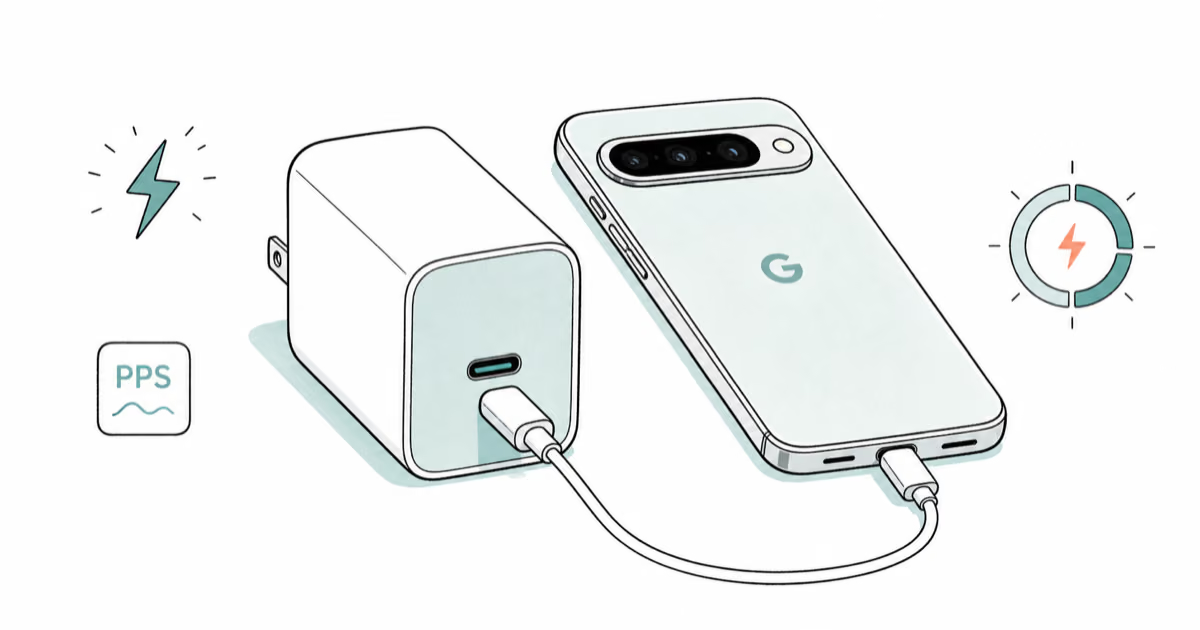
Best Charger for Google Pixel 10 Pro: PPS Picks 2026
The best charger for Google Pixel 10 Pro needs PPS. A 30W brick covers the 10 and 10 Pro; the Pro XL wants 45W. Four PPS picks compared here.
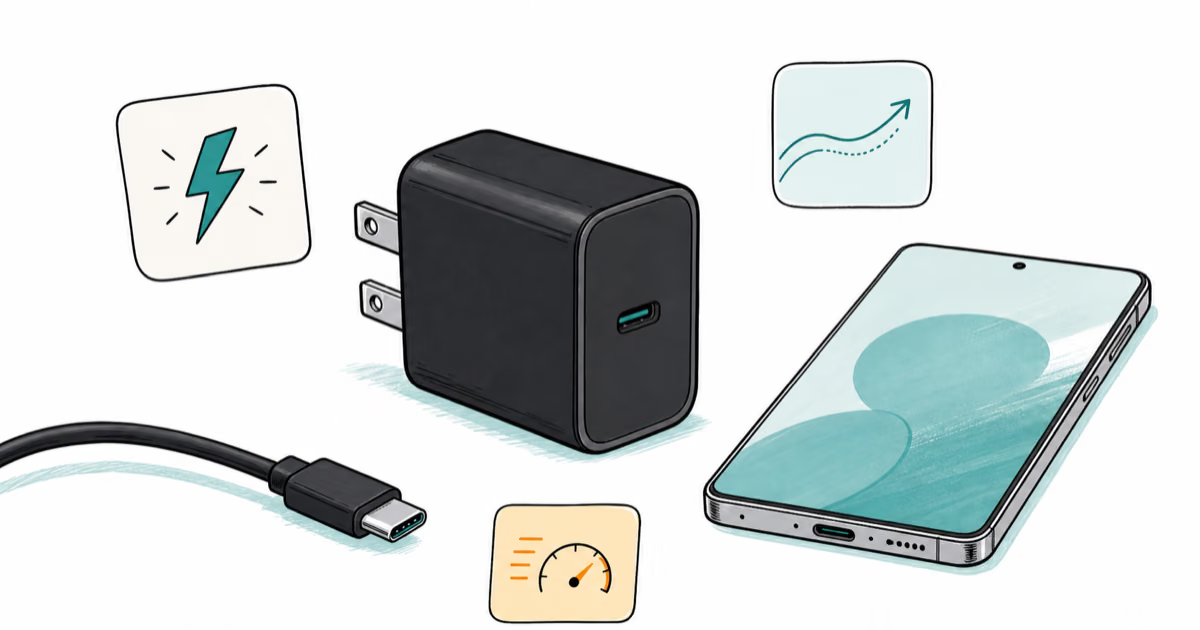
Best Charger for Samsung Galaxy S25 Ultra: 45W PPS Picks
The best charger for Samsung Galaxy S25 Ultra needs PPS to hit a full 45W. Compare four PPS picks and learn why most 45W chargers fall short here.